
The 13 days Uganda safari begins in Kigali and ends in Kampala. The route takes you through a variety of landscapes including rainforests, open savannah plains, rivers and volcanic mountain ranges. The journey brings together a range of experiences such as gorilla trekking, chimpanzee tracking, game drives, boat safaris and cultural encounters with local communities along the way.
Trip summary – 13 Days Uganda safari
Day 1: Transfer from Kigali to Bwindi Impenetrable National Park.
Day 2: Gorilla Trekking in Bwindi.
Day 3: Transfer to Ishasha Sector for tree-climbing lions.
Day 4: Game Drive and Boat Cruise in Queen Elizabeth National Park.
Day 5: Transfer to Kibale Forest National Park and afternoon chimpanzee tracking.
Day 6: Transfer to Murchison Falls National Park.
Day 7: Game drive and boat cruise.
Day 8: Transfer through the Northern gate to Kidepo Valley National Park.
Day 9: Game drive in Kidepo Valley and evening cultural tour.
Day 10: Game drive and transfer to Mount Elgon (Sipi area).
Day 11: Hiking Sipi Falls.
Day 12: Transfer to source of the Nile.
Day 13: Transfer to Kampala for Departure.
Detailed itinerary – 13 days Uganda Saf
Day 1: Transfer from Kigali to Bwindi Impenetrable National Park
Your safari begins in Kigali where you will meet your professional guide for a short briefing before starting the journey to southwestern Uganda. As you leave Kigali, the drive passes through rolling hills, terraced farms and green countryside typical of the region. The journey to Bwindi Impenetrable National Park takes about 4 to 5 hours depending on the border crossing process and the gorilla trekking sector you are visiting. Along the way, you will pass through the highland areas near the Virunga Mountains, a chain of volcanic mountains shared by Uganda, Rwanda and the Democratic Republic of Congo.
Bwindi Impenetrable National Park is a protected tropical rainforest and a UNESCO World Heritage Site known for its dense vegetation and cool climate. The park is home to a large population of mountain gorillas and also supports other wildlife including forest elephants, black-and-white colobus, L’Hoest’s monkey and many forest bird species. Upon arrival, you will check in at your lodge and relax for the evening. Dinner and overnight stay will be at Trekker’s Tavern Cottages (Budget), Bakiga Lodge or Lake Mulehe Safari Lodge (Deluxe) or Mahogany Springs Lodge and Four Gorillas Lodge for luxury accommodation.
Day 2: Gorilla trekking in Bwindi Impenetrable National Park
After breakfast, the lodge will provide a packed lunch before you are transferred to the park headquarters in the sector indicated on your permit within Bwindi Impenetrable National Park. Upon arrival, you may be welcomed with a short cultural performance from the Bakiga or Batwa communities. A briefing by the park rangers usually takes place between 7:30 am and 8:00 am. During the briefing, you will learn about gorilla conservation, gorilla behavior, trekking rules, safety guidelines and the importance of gorilla tourism to local communities.
After the briefing, visitors are placed into groups of up to eight people each led by an experienced ranger guide. You will then begin the trek through the forest in search of the assigned mountain gorilla family. The time taken to locate the gorillas depends on their movement and may take several hours. The trek passes through dense tropical forest with steep and sometimes slippery trails under thick tree cover. Along the way, you may see different plant species, butterflies and other wildlife such as L’Hoest’s monkey, vervet monkey and black-and-white colobus. Other animals occasionally seen include bush pigs, warthogs, bushbucks, duikers and forest elephants.
Once the gorillas are found, you will spend one hour observing them while taking photographs and watching their behavior while keeping a safe viewing distance of about three meters. Visitors taking part in gorilla habituation are allowed more time with the gorillas including observing younger gorillas as they interact and play. After the trek, you will return to the park headquarters where you will receive a trekking certificate before heading back to the lodge for lunch and relaxation. Dinner and overnight stay will be at Trekker’s Tavern Cottages (Budget), Bakiga Lodge or Lake Mulehe Safari Lodge (Deluxe) or Mahogany Springs Lodge and Four Gorillas Lodge for luxury accommodation.
Day 3: Transfer to Ishasha Sector for tree-climbing lions
After breakfast, you will transfer to Queen Elizabeth National Park. Along the way, you will stop in the local communities around Kanungu District where you will learn about traditional coffee growing and processing practices used by local farmers. You will then continue through the Ishasha sector in the southern part of Queen Elizabeth National Park for a game drive in search of the well-known tree-climbing lions. This area is one of the few places where lions are regularly seen resting in large fig trees especially during the hotter hours of the day. Besides lions, you may also see elephants, buffaloes, Uganda kobs, topis and other wildlife found in the savannah plains. After the game drive, continue to your lodge for dinner and an overnight stay at Parkview Safari Lodge or Enganzi Safari Lodge.
Day 4: Game Drive and Boat Cruise in Queen Elizabeth National Park
After an early breakfast, you will go for a morning game drive through the Kasenyi Plains and Queen’s Mile in Queen Elizabeth National Park located within the Albertine Rift Valley. Game drives in the park usually begin around 6:30 am when many animals are still active in the cooler morning hours. During the drive, you may see side-striped jackals, hyenas, warthogs, buffaloes, elephants, topis, Uganda kobs, waterbucks, lions and occasionally leopards moving through the savannah grasslands. The park is also known for its rich birdlife and has one of the highest bird counts in East Africa. Bird species that may be spotted include the African Skimmer, Chapin’s Flycatcher, Black Bee-eater, White-winged Warbler, Pink-backed Pelican and the martial eagle.
After the game drive, return to the lodge for lunch and some time to relax. In the afternoon, you will proceed to Mweya Jetty for a boat cruise along the Kazinga Channel which usually starts at around 2:00 pm. The cruise lasts about 2 hours and follows the natural channel connecting Lake George and Lake Edward over a distance of about 45 km. During the cruise, you may see large groups of hippos in the water, buffaloes resting along the shores and Nile crocodiles basking nearby. The channel is also an important area for birdlife with species such as pelicans, kingfisher and other resident and migratory birds commonly seen along the banks. The boat ride provides good opportunities for wildlife viewing, photography and bird watching. In the evening, you may take another short game drive to look out for wildlife during the cooler hours before returning to the lodge for dinner and an overnight stay at Parkview Safari Lodge or Enganzi Safari Lodge.
Day 5: Transfer to Kibale Forest National Park and afternoon chimpanzee tracking
After breakfast, you will begin your journey to Kibale National Park covering approximately 157 km which usually takes about 2 to 3 hours by road. Along the way, you may enjoy views of the distant Rwenzori Mountains also known as the “Mountains of the Moon,” as well as the scenic countryside of western Uganda.
Kibale National Park is a tropical rainforest known for having one of the highest concentrations and diversity of primates in Africa. The park is especially famous for its population of chimpanzees. Other primates found in the forest include L’Hoest’s Monkey, Olive Baboon, Red-tailed Monkey, Uganda Red Colobus, Black-and-white Colobus, Blue Monkey, Grey-cheeked Mangabey, bushbabies and pottos. The park also supports over 70 mammal species, around 375 bird species, many butterflies and a rich variety of plant life.
Upon arrival, you will check in at your lodge depending on your preferred level of comfort. Accommodation options include Chimpanzee Guest House (Budget), Turaco Treetops (Deluxe), or Papaya Lake Lodge and Crater Safari Lodge for luxury accommodation. In the afternoon, you will transfer to Kanyanchu Visitor Centre for chimpanzee tracking. Before the activity begins, the park rangers will give a short briefing about the trekking guidelines and safety rules while in the forest. After the briefing, you will enter the forest with a ranger guide in search of the chimpanzees. These primates are considered the closest relatives to humans and are known for their social behavior and communication. During the trek, you may observe them feeding, grooming, resting or interacting with each other in the forest canopy.
The forest walk also gives opportunities to see other primates such as Vervet monkey, L’Hoest’s monkey, Grey-cheeked mangabey and Black-and-white colobus. Once the chimpanzees are located, you will spend one hour observing them in their natural habitat while learning about their behavior and daily activities. After the trek, you will return to the park headquarters where visitors are usually awarded a chimpanzee trekking certificate as a record of the experience.
Day 6: Transfer to Murchison Falls National Park
After breakfast, you will begin your journey to Murchison Falls National Park, a drive of approximately 441 km which usually takes around 9 hours. Along the route, you will pass through different landscapes including rural villages, agricultural plantations, natural forests and parts of the Albertine Rift Valley. You may also enjoy views of Lake Albert and the scenic Butiaba Escarpment as you continue toward northern Uganda. A lunch stop will be made in Masindi before proceeding with the journey to the park.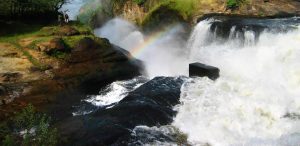
Murchison Falls National Park is the largest national park in Uganda, covering about 3,840 square kilometers. The park is known for its savannah grasslands, riverine forests, wildlife and the famous Murchison Falls where the Nile River passes through a narrow gorge before flowing downstream toward Lake Albert. The park supports a wide range of wildlife with around 76 mammal species and more than 450 bird species recorded. During your stay, you may encounter elephants, buffaloes, giraffes, antelopes, lions and different bird species found within the park. Upon arrival, you will check in at your lodge for dinner and an overnight stay. Accommodation options include Paraa Safari Lodge, Murchison River Lodge, or Red Chilli Rest Camp.
Day 7: Game drive and boat cruise
After breakfast at around 6:30 am, you will head out for an early morning game drive in Murchison Falls National Park. The drive takes place in the northern section of the park, an area characterized by open savannah grasslands, acacia woodland, borassus palms, riverine vegetation and a variety of wildlife habitats. During the game drive, you may see lions, leopards, buffaloes, giraffes, waterbucks, Jackson’s hartebeests and Patas Monkey. The park is also known for its birdlife and species that may be spotted include the Saddle-billed Stork, Denham’s Bustard, Grey Crowned Crane, Squacco Heron, Piapiac, Red-throated Bee-eater, Goliath Heron and different species of kingfishers. After the game drive, return to the lodge for lunch and some time to relax.
In the afternoon, you will proceed to Paraa Jetty for a boat cruise along the Nile River to the base of Murchison Falls. The boat trip usually starts at around 2:00 pm and lasts about 3 hours. During the cruise, you may see Nile crocodiles, elephants, hippopotamuses, buffaloes and different bird species along the riverbanks including the African Fish Eagle, African Jacana, Goliath Heron and occasionally the Shoebill. After the boat cruise, return to the lodge for dinner and an overnight stay.
Day 8: Transfer through the Northern gate to Kidepo Valley National Park
After breakfast, you will depart for Kidepo Valley National Park exiting Murchison Falls National Park through Tangi Gate before continuing along the Gulu–Kitgum road. The journey covers approximately 440 km and usually takes about 9 to 10 hours making it a full day drive through northern Uganda. Along the way, you will pass through rural villages, open savannah landscapes, small trading centers and local farmlands that reflect everyday life in the northern region of the country. A lunch stop will be made in Gulu, one of the major towns in northern Uganda before continuing toward the Karamoja region.
Kidepo Valley National Park is located in the northeastern part of Uganda near the borders of South Sudan and Kenya. The park covers about 1,442 square kilometers and is known for its savannah plains, rocky hills, seasonal river valleys and remote wilderness setting. The park supports a variety of wildlife with over 75 mammal species and more than 470 bird species recorded within the area. Upon arrival, you will check in at your lodge and relax for the evening. Accommodation options include Kidepo Savannah Lodge for budget and midrange accommodation, Adere Safari Lodge for midrange or Apoka Safari Lodge for luxury accommodation.
Day 9: Game drive in Kidepo Valley and evening cultural tour
After breakfast, you will go for a morning game drive in the Nataba Gate area of Kidepo Valley National Park. This area is known for its open grasslands where animals such as the Cheetah are sometimes seen. Other wildlife that may be spotted during the drive includes buffaloes, elephants, Plains Zebra, Jackson’s Hartebeest, elands, oribis and Uganda kobs. The park is also known for its birdlife and species that may be seen include the Kori Bustard, Secretarybird, Abyssinian Roller, Yellow-billed Hornbill and the Ostrich which is one of the unique bird species found in this park in Uganda.
As you explore the park, you will pass through landscapes made up of small hills, rocky outcrops, isolated rock formations and areas covered with borassus palm trees. Some viewpoints offer clear views of the Narus Valley and the Narus River which attract wildlife especially during the dry season. The drive may also continue toward the Kidepo Valley area near the South Sudan border where you can visit the Kanangorok Hot Springs. This remote part of the park is another area where ostriches are occasionally seen although their numbers remain low due to past poaching.
In the afternoon, you will go for a guided cultural visit to nearby Karamojong communities to learn about their traditional way of life. The visit may include communities around Karenna and Kapedo where you will interact with local elders and residents. During the tour, you will visit traditional manyattas, cattle kraals and see locally made items such as stools, spears, bows and arrows, knives, jewelry, grinding stones and traditional clothing. Visitors may also take part in some cultural activities and learn more about the nomadic lifestyle of the Karamojong people. Later in the evening, you may enjoy a short sunset game drive to look out for more wildlife before returning to the lodge for dinner and an overnight stay at Kidepo Savannah Lodge, Adere Safari Lodge or Apoka Safari Lodge.
Day 10: Game drive and transfer to Mount Elgon (Sipi area)
After breakfast, you will begin your journey to Sipi Falls located on the slopes of Mount Elgon in eastern Uganda. The drive takes about 8–10 hours passing through towns such as Kotido, Moroto, Soroti and Mbale before reaching the Sipi highlands in the late afternoon. Along the way, you may stop briefly around Mount Moroto for views of the surrounding plains and hills. As the journey continues toward Soroti, you will pass through rural trading centers and local communities with possible short breaks near Lake Kyoga depending on time. Beyond Mbale, the scenery gradually changes into cooler highland landscapes with rolling hills, farms and coffee plantations.
By late afternoon, you will arrive at Sipi Falls, a series of three waterfalls flowing down the foothills of Mount Elgon near the Kenya border. The highest waterfall drops about 100 meters and is surrounded by cliffs, caves, green vegetation and coffee-growing communities. The area is also known for its cool climate and Arabica coffee grown on the mountain slopes. Upon arrival, you will check in at your lodge and relax after the journey. Accommodation options include Sipi River Lodge or Sipi Valley Resort for luxury accommodation and Lacam Lodge or Sipi Falls Resort for midrange stays.
Day 11: Hiking Sipi Falls
After breakfast at the lodge, you will be provided with a packed lunch for the day’s activities. You will then set off for a guided nature walk around Sipi Falls starting from the Crow’s Nest viewpoint. From here, you will follow a trail along River Sipi leading to the waterfalls. During the hike, you will visit two additional waterfalls that descend from cliffs of over 100 meters, where you can take time to enjoy the surrounding scenery. Along the way, you will pass through local farmland with crops such as maize, bananas, coffee, and sugarcane as well as small caves, homesteads and views of the valley below.
For those interested in more activity, there is an option to try abseiling down the cliffs near the waterfall for a closer view of the falls from below. In the late afternoon, you can relax and enjoy the sunset over the hills before returning to your lodge. Dinner and overnight stay will be at your lodge.
Day 12: Transfer to Jinja and visit the source of the Nile
In the morning, you will take a guided walk around Sipi Falls and learn how locally grown Arabica coffee is processed. During the visit, you will meet Sabiny widowed women who lost their husbands during past cattle rustling incidents in Karamoja and later turned to coffee farming as a way of rebuilding their livelihoods. They will explain the different stages of coffee production, including planting, tending the coffee plants, harvesting, drying and preparing the beans.
After the coffee experience, you will begin your journey of about 194 km (around 4 hours) to Jinja located in eastern Uganda to the east of Kampala. Jinja is the second largest town in Uganda and is well known as the place where the Nile River begins its flow from Lake Victoria, making it the source of the world’s longest river. The town has a mix of older and modern influences including colonial-era buildings, gardens and small industrial areas. It is also home to the Owen Falls Dam built in 1952 which supports hydroelectric power generation and local industries. Upon arrival, you will check in at your lodge depending on your preferred level of comfort. Accommodation options include Lemala Wildwaters Lodge, Jinja Nile Resort and Gately on the Nile.
In the afternoon, you will take a short drive to visit the Source of the Nile, where the river begins its long journey across Africa. You will also see the nearby monument of Mahatma Gandhi, marking the area where part of his ashes were scattered. After the visit, you will enjoy a boat cruise on the Nile with views along the river. Optional adventure activities in the area include white-water rafting, bungee jumping, jet boating, quad biking and horseback riding offering different ways to experience the Nile region.
Day 13: Transfer to Kampala for departure
After breakfast, you will depart from Jinja and drive to Kampala. Along the way, you will make a few stops to break the journey and some points of interest. Your first stop will be Mabira Forest, where you can take a short nature walk. During the walk, you may see different bird species, butterflies and some monkeys within the forest. You will then continue to Ssezibwa Falls, a cultural site that holds significance within the Buganda culture. Here, you will learn about the local traditions and beliefs connected to the site.
Afterwards, you will visit Ewaffe Cultural Village along the Kayunga road. At the village, you will learn about local culture, including farming practices, traditional food preparation, crafts and other community activities. You may also take part in simple hands-on experiences such as cooking or craft making. After the visits, you will continue to Kampala and check in at your hotel. Accommodation options include Sheraton Kampala Hotel, Protea Hotel by Marriott Kampala Skyz or Kampala Serena Hotel for your overnight stay.