

Fort Portal is 294 km (5-hour drive) west of Kampala and Entebbe airport. It is in Kabarole district which is part of Toro kingdom. Karuzika, the royal palace of king (Omukama) Oyo, sits on the hill above the city at 1,523 meters above sea level.
The name Kabarole is a Rutoro dialect which means “let them see.” The view of the Rwenzori mountains is spectacular from the top of the palace, which was built in 1964. Batoro are some of the friendliest, humble and hard working people in Uganda. They have utilised the rich black volcanic fertile soils well.
Economic activities in Fort Portal
The area east of the city is dominated by green tea estates including Mwenge and Kijura. Entrepreneurs have found fortune in operating coffee farms such as the Clerk farm in the nearby Kyenjojo district as well as fruit and dairy processing factories. There are fresh food markets in and out of the city such as Mpanga, where you can grab fruits and snacks.
The town attracts many people for trade with a good road network connecting other regional big and small towns like Kasese, Katunguru, and Bundibugyo. The government has laid out innovative initiatives and upgraded Fort Portal to a tourism city status. The city has got a variety of hotels, restaurants for both luxury, budget and backpackers. There are several cultural sites such as Amabere Ga Nyina Mwiru cave and stalactites, which appears in much of the Bachwezi empire folklore.
Historical buildings that were built in the 20th century have been preserved including Rwengoma palace. Fort Portal is a pivotal point for safaris to Kibale forest, Queen Elizabeth, Rwenzori mountains, and Semliki national parks, and Toro Semliki wildlife reserve. You can take trips to these parks and back to town, a great option for self-drive safari. Being in the midst of protected areas, the leaders are proposing to establish a zoo for wildlife education purposes and a cultural museum.
Volcanic effect
Fort Portal city is flanked by the Albertine graben to the north, Lake Edward to the southwest and the Rwenzori mountain range 54km north east. The city is within the volcanic field known as Ndali-Kasenda characterized by several volcanic crater filled lakes including Lake Kigere, a spiritual site associated with the Bachwezi demigods.
There are over 50 crater lakes around Fort Portal where lodges have been built on the rim of some craters such as lake Kyaninga lodge, Crater Safari Lodge, and Papaya lake lodge, which is surrounded by three craters including Kifuruka, Nyinambuga, and Lyantonde. The lakes were formed as a result of violent volcanic eruptions about 541 million to 4 billion years ago during Precambrian, the earliest era of geological history recorded.
This was estimated by the Smithsonian Institute of Natural History by the hydrocarbon dating method used at Kasensankaranga crater. Furthermore, a scholarly article in the Journal of Geological Society (“Petrology of the Volcanic Fields East and South of Rwenzori, Uganda, 1932.” indicates that the volcanic field marks the boundary of the dry and alkali lake beds to the south in the plains of Queen Elizabeth national park. Unlike this park, the soils around Fort Portal support farming because they are of low-alkali carbonate volcanism. When you travel to or from Murchison falls, the Butiaba escarpment on the way marks the end of the Albertine rift valley.
Colonial history
Uganda is one of the countries that have preserved colonial history by keeping names of British people alive in many parts of the country. The name Fort Portal alone is proof and the city has thrived on this legacy. The area was a territory of the Toro kingdom, which was rising as the Bunyoro Kitara empire began to weaken in the 19th century. By the year 1890, the British had sent Capt. Frederick Lugard to the Buganda kingdom in the central region.
Kabaka Mwanga had agreed to his terms to sign a treaty that would allow creation of a protectorate. However, Toro and Bunyoro were still resistant. Lugard proposed to unify all kingdoms for a protectorate to extend beyond the borders of Buganda. Lugard and his officers including Gerald Portal convinced Kyebambe II the king of Toro who became friends and allowed them to form an army camp with Sudanese Nubian soldiers; they defeated Kabalega of Bunyoro.
Eventually, all kingdoms were brought under indirect rule in 1894 and Kampala became the capital city of the new nation. To mark the victory, Lugard built a fort named Fort Gerry which was later renamed to honor his fellow Gerald Portal hence the name Fort Portal. Other colonial administrators remained in the area including members of the Church Missionary Society who founded banks, schools, hospitals and a golf club, which have all stood the test of time. Fort Portal therefore became a strategic town for the subsequent explorers who intermarried with locals. There are many descents of both Sudanese and Europeans in the area.
Lugard road
A great example of colonial streets in post independent Uganda, Lugard road offers a number of shops that were built in the 1920s. The shops are of Indian architecture given that Britain had brought many of them during the construction of the East African Railway (1,060 km) that reached Kampala in 1931. The same architectural buildings are also found in Jinja city at the source of the Nile, where many Asians established their business. Aga Khan is one of the prominent Asian origin foundations in Uganda with a mosque in Fort Portal city, schools and hospitals in Kampala capital city.
Oldest buildings in Uganda
Fort Portal has some of the oldest buildings in Uganda including libraries, schools and hospitals, which are open for visiting during the day with a guide and permission from the caretakers.
Kabarole hospital and Kyebambe girl’s school
Built in 1903, Kabarole hospital is one of the oldest missionary medical institutions in Uganda. Before reaching Fort Portal, Catholic missionaries had already gained ground in Buganda kingdom with 25 Uganda martyrs and many converts that had been killed between 1885 – 1891 on the orders of Kabaka Mwanga for refusing to denounce their new faith. Once the work of preaching was done, they started building permanent structures. Mengo hospital was established next to Lubiri (Mengo Palace), which is Uganda’s oldest colonial hospital. In Fort Portal, their mission was to extend similar structures including Kyebambe girl’s school built in 1910 and St. Leo’s college and Nyakasura in the 1920s.
The Library and the bookshop
The British council opened the Fort Portal Library in 1963, a year after Uganda’s independence. They had earlier built a public bookshop in 1958 and both of them contain a collection of books and manuscripts that are open to the public.
Toro golf club
Colonial administrators who remained in Fort Portal built the Toro golf club in 1914, which has 9 holes. The club is within the city along Fort Portal Kampala road and offers accommodation. A trench system that surrounds it is a mark of intense fighting that took place.
Toro Royal Palace
The Toro kingdom royal palace known as Karuzika was built in 1964 on Fort Portal’s highest hill during the reign of Omukama Kamurasi Rukidi III (1926-1965). By then, the hill was said to be infested with evil spirits and the king decided to build there and cast them away. He said Kabarole which means “let them see” Rukidi was a son of Daudi Kasagama Kyebambe, king of Toro between 1891 – 1928, who was the first to establish a two-storey palace on the same hill.
Kyebambe cultivated a good relationship with the British royal family and Princess Margret graced the opening of the palace in 1965. A year later, traditional kingdoms were abolished by president Obote, which led to a political crisis in 1966. Soldiers ransacked the palace looking for royal treasures during the reign of Olimi III who renovated it in 1993 and died in 1995. The current king of Toro is Oyo Nyimba Kabamba Iguru who took the throne at the age of 5 years.
Sacred natural sites around Fort Portal
With Fortal becoming a tourism destination, several natural sites were uncovered including Amabare Ga Nyina Mwiru caves and stalactites, lake Kigere, and Ibaale rock. These sites are known to have been left behind by the Bachwezi who were the earliest inhabitants of western Uganda. The folklore about Bachwezi is that they were demigods who subdued the Batembuzi empire.
The former brought the Ankole-Watusi longhorn cows which made the survival of the Batembuzi cultivators difficult. The Bachwezi empire also disappeared later on with the coming of the Bantu people, which has remained an unexplainable mystery. Some theories state that they merged into other tribes including the Babito who founded the Bunyoro-Kitara empire in the 14th century of which Toro kingdom stemmed from. As such, Toro bears footmarks and sites of the Bachwezi of which most are spiritual places of worship as people believe that Bachwezi didn’t die. These sites are easy to reach from Fort Portal city.
Amabere Ga Nyina Mwiru cave and stalactites
The Amabere caves are conveniently located 8 km west of the city along the Fort Portal – Bundibugyo road. Geographically speaking, the cave’s mouth is surrounded by stalactites and stalagmites. These features are formed due to constant dripping of calcium carbonate water on the floor of the cave. These features have the structure of human, canine, and cow udder breasts. People connect it to the mythology surrounding Nyinamwiru, a princess and the daughter of Bukulu, king of the Chwezi empire.
Her breasts were amputated when the king’s watchmen predicted that his daughter would give birth to a son who would overthrow him. According to the legend, she managed to flee and took refuge in some caves, where she became pregnant and gave birth to Ndahura, who went on to defeat his grandpa and rule the empire until its downfall in the 16th century. The miraculous breasts that fed the son and his mother’s milk allowed them to survive in the cave caused people to wonder and give the stalactites the nickname “the breasts of Nyinamwiru.” You may think it is raining as water drips through the rocks. During the natural walk around the caves, there are waterfalls to see.
Lake Kigere
Kigere crater-filled lake is 5 km from the city and has the shape of a giant human footprint. The locals believe the lake was formed when a Chwezi man attempted to jump from the summit of Kyeganywa hill 1,588 meters. Hiking to the top of the hill takes 5 minutes and offers spectacular views of other crater lakes at the foothill including Saaka in Kalyango and Nyabikora.
Ibaale rocks
Located 4 km from the city along the Kamwenge road, Ibaale rocks also bear the footmarks of Bachwezi. The rocks are revered by the locals as a place of a spiritual home and often go there to worship the gods.
Historical and cultural sites in and around Fort Portal are open to the public for tourism. Those intending to visit them are recommended to get a local guide who will provide all the necessary information.

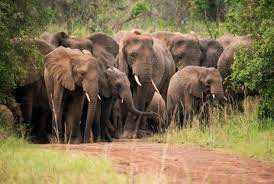
 Akagera is famous for harboring the Big Five mammals including lions, black and white rhinos, leopards, elephants and buffaloes. Besides, there are zebras, Maasai giraffes, warthogs and over 8 antelope species are found in Akagera National Park including impalas, elands, reedbuck, topi, kobs, klipspringers, kobs, sitatunga and waterbucks. Since 2010 the African Parks effective law enforcement and habitat restoration efforts have led to an increase in wildlife populations. A survey conducted in 2021 found that the monitored population of lions had grown from 17 to 37 lions in Akagera national park and elephants also grew by 20% from less than 30 to 133. There are over 4,000 buffaloes. There are also several small African wild cat species such as side striped jackals and African civets. Primate species of African savanna are also found in Akagera including velvet monkeys, olive baboons, and red-tailed monkeys.
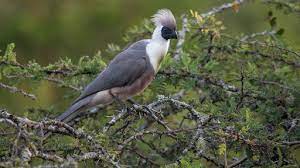 Birds are a major attraction for safari in lake Mburo national park with 317 species recorded of which 35 are raptors including African harrier hawk, which is an African-Eurasian migrant. The largest concentration of raptors in Uganda can be found at Lake Mburo, which is second only to Kidepo valley. Martial Eagle, the largest bird of prey, is also found in the park along with the African crested eagle, gray kestrel and vultures including white-headed, Reppell’s griffon and white-headed vultures.
 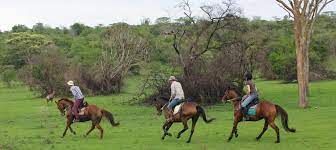 Horseback riding safari in Lake Mburo were introduced in 2008 by Mihingo, one of the luxury lodges in the park. Since then, the number of horses has increased and new routes were opened, giving you access to some of the parts of the park where other non guests don’t reach. The maximum weight horses can carry is strictly 85, however. There are strong horse breeds that carry 100 kgs. Mihingo horseback rides are available for both amateur and experienced riders. Experienced rides last 4-5 hours and go up to the Warukiri hill, where the view of almost all the 5 lakes surrounding the park.
 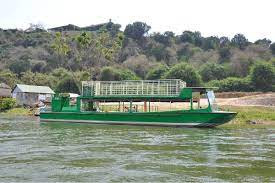 Boat cruises in Lake Mburo offer opportunities to look for water bird species and aquatic wildlife species such as Nile crocodiles, hippos and sitatunga. The activity is available in the mid morning, afternoon and sundowners for those intending to observe equatorial sunsets. The banks of lake Mburo are enclosed by bushes and swamps, making it difficult to see buffaloes. However, sometimes you can see solitary bull buffaloes hiding on the shores under the canopy. Those intending to watch elephants and buffaloes can consider the boat cruise along the Kazinga channel in Queen Elizabeth and Nile River in Murchison falls national parks.
 Very early today, the driver guide representing


 The reduction of gorilla permit prices will also benefit local communities surrounding
  Even after the introduction of discounted mountain gorilla permits, Rwanda remains a luxury gorilla safari destination in Africa. The Land of a Thousand Hills upgraded to a luxury destination in 2017 when it doubled the cost of gorilla permit from the $750 to $1500. This was at first seen as a risk of losing many travelers to Rwanda but it turned out to be opposite. Rwanda gorilla market grew bigger than before. in 2018 just a year after the hike of gorilla permit prices, Rwanda hosted 1.71 million visitors, an 8% increase compared to the number of visitors that had visited the site in 2017.
 Kibale forest national park has an elevation of 920-1,590 meters above sea level, it’s a hilly region at the base of Rwenzori Mountain Range. The forest ecosystem has a variety of vegetation including moist evergreen broad-leaved forests, tropical highland forest, semi-deciduous tropical forests, which cover 77% of the park. The park also contains grasslands, woodlands, bushlands, swamps and wild conifer plantations. During the dry season (June to September and December to February), the semi-deciduous trees show partial loss of foliage, creating a beautiful scenery in the southern part. Some trees in Kibale forest reach up to 45-meters high with large buttress roots. These gigantic trees occur in the dense tropical highland forest areas in the centre and southern parts of Kibale. In the north of Kibale called Sebitoli, the vegetation contains over 70% regenerating forests with fig trees due to the commercial timber extraction that took place in the 1950s. The region is also home to chimpanzees, which are being studied because of the numerous farms that surround it.
 With over 1,500 chimpanzees, Kibale forest national park is one of the best destinations to see chimpanzees in the wild. UWA has since 1993 habituated several communities of which four are open for tourism including the most visited Kanyantale troop with over 15 members.
 Frequent travelers to Uganda possibly enjoy some of the country’s delicacies such as “Rolex” but for a first-time visitor, this might be a challenge. There are a number of tips in regard to dining and drinking while in this beautiful country.
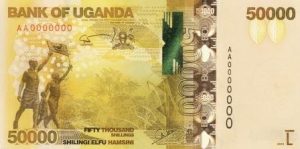 Uganda Shilling is the National Currency of Uganda, and you will need it during grocery shopping, paying at restaurants, transport, souvenir shopping and other small transactions. For this reason, it is important to exchange small amounts of money into Shillings before leaving home. The best exchange rates are in Banks and Forex Bureaus in Kampala or Entebbe.
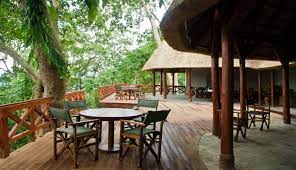 Mikeno lodge is set on the foothills of Mount Mikeno at Rumangabo, the headquarters of Virunga National Park. It has 12 stone-built cottages with grass thatch roofs surrounded by the Mahura forest teeming with monkeys and birds, making it a perfect place for nature lovers. Each cottage contains en-suit bathrooms with hot and cold showers. There’s a fireplace and private lounge in every room guaranteeing maximum relaxation. Hydro power is available for you to charge your gadgets with 2 pin standard plugs in the rooms and in the main lodge building, restaurant and bar. The raised platform offers a view of the forest as you enjoy food including honey roasted butternut with avocados mousse. The lodge has a garden and also obtains vegetables and tropical forests from the community farmers, making it sustainable.
 Bukima tented camp is 10-minute walk from the gorilla center and close to the ranger station, making it a safer place to stay in Virunga national park. Inside the tents, you will find king-size beds, hot showers, sitting chairs and en-suite bathrooms. Besides the restaurant and bar, the camp has an outdoor fireplace and dining option.
 One of the best accommodations for nature lovers to stay in Virunga national park, Lulimbi tented camp offers 10 safari tents with en-suit bathrooms. The camp is built on the banks of Ishasha river in the eastern part of Virunga national park. The area contains both riverine forests and savanna plains, which attract mammal species including elephants, congo buffaloes, hippos and giant forest hogs often graze around. The camp is 160 km away from the park visitor center, thus can be used as an option for those intending to explore the different side of Virunga. In addition to gorillas, guests at Lulimbi tented camp can enjoy safari game drives.