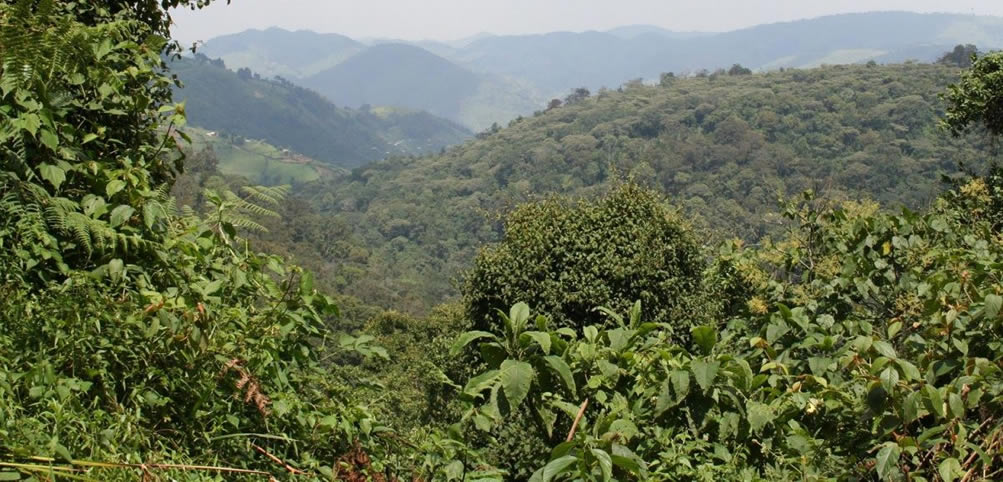
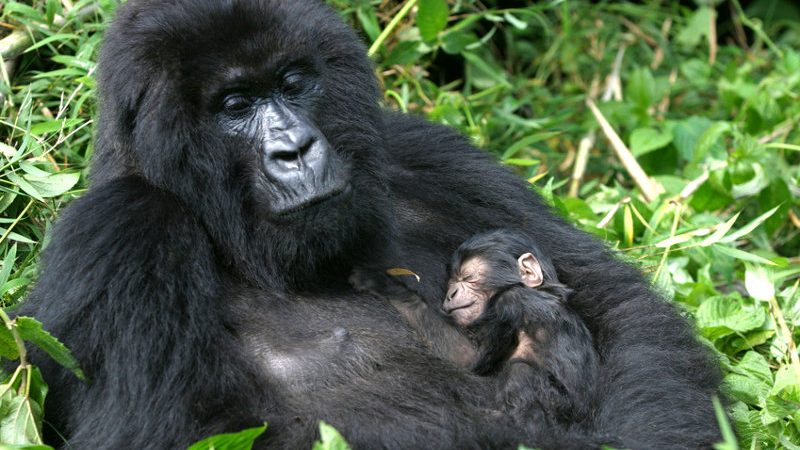
There are things that you should consider before confirming a gorilla safari in Uganda, Rwanda and the Democratic Republic of Congo. Safaris to see gorillas have nowadays become common among travelers coming to Africa attracting a high number of travelers from all parts of the world. The mountain gorilla (gorilla beringei beringei) is an African endangered great ape and does not thrive in captivity. The primate lives only in mountainous tropical forests of East and central Africa including Bwindi Impenetrable Forest National Park in south-western Uganda and the Virunga massif area which encompasses Volcanoes National Park (Rwanda), Mgahinga Gorilla National Park (Uganda) and Virunga National Park in the eastern part of Democratic Republic of Congo. The population of mountain gorillas in Africa is 1063 individuals according to recent statistics by Dian Fossey Gorilla Fund International (DFGFI) the world’s leading gorilla conservation organization. Since the discovery of gorillas in 1902, their numbers had been declining due to poaching, habitat loss, human conflicts and diseases. There were less than 500 gorillas in the 1980s. Conservation efforts that Dian Fossey pioneered including ant-poaching patrols (active conservation techniques) and veterinary care that intervenes to treat sick or injured gorillas helped subsequently in the monitoring and evaluation of the rate of gorilla population growth. Her work had great influence in protecting the primates for future generations. Today, gorilla trekking is the very essence of conserving mountain gorillas and support economic development in order to change the attitude of local people towards conservation in the communities adjacent to the protected areas mentioned above. Regardless of the destination you choose for a gorilla safari, there are certain things to know.
Gorilla trekking rules and regulations
When the first official gorilla tourism program begun in 1979 in Volcanoes National Park Rwanda, the main interest was to earn revenue rather than protect the primates. With the habituation of more gorilla groups and increase of tourist visits, the possibility of human disturbance which could disrupt the natural behavior of gorillas became a subject on which the establishment of gorilla rules was based. This included time spent per day with gorillas in their natural habitat. Consequently, several rules were created including maintaining a distance of 7 meters (21 feet), restricting those who are ill to minimize transmission of diseases and limiting the number of people to 8 visitors who can visit one gorilla family per visit for 1 hour. With time, more regulations were added including the following:-
• Visitors must wear facemasks due to covid-19 pandemic. Be sure to carry disposable masks and disinfectants.
• Prohibition of eating, smoking and drinking when with the gorillas
• Keeping voices low within 200 meters of reaching the gorillas
• No use of flash photography,
• Minimum age of trekking gorillas is strictly 15 years
• Visitors are must turn their face away and cover their mouth when coughing or sneezing
• Human waste must be buried 30 centimeters deep underground
• No trash should be left in the forests
• Sick visitors including those who test positive for covid-19 are not allowed to visit the gorillas.
• Visitors are not allowed to clear away vegetation to get a better view and must remain in a tight group under the guidance of a
wildlife rangers.
 Before confirming a gorilla tour, you should be in position to meet the above rules. Adhering to these rules is a win-win situation for both viewers and gorillas. Mountain gorillas share 98% of their DNA with humans which makes them vulnerable to infectious diseases including influenza (common cold), diarrhea and covid-19. Not only diseases can kill the primates but also unregulated gorilla visits can disrupt the natural behavior and ecology of gorillas. More importantly, the gorilla trekking briefing offers detailed instructions of things to expect on the day. Visitors must attend the briefing to understand to what to do in case a gorilla charges. Though, gorillas are known to be gentle and peaceful animals but can be aggressive when threatened. Obeying the rangers offers peaceful gorilla viewing opportunities which makes gorilla trekking safe for visitors. Furthermore, two of five rangers are armed in order to protect you against any potential danger including forest elephants. In return for good thanks, you can tip your rangers or put money in the tip-box at the gorilla center.
Gorilla permits
A gorilla permit allows visitors to visit gorillas strictly for 1 hour in Uganda, Rwanda and Democratic Republic of Congo. People qualified to participate in gorilla trekking activity must be 15 years old. Permits are available for booking through the official gorilla conservation authorities including Uganda Wildlife Authority (UWA) head offices in Kampala capital city, Rwanda Development Board (RDB) and Visit Virunga for Democratic Republic of Congo or through a tour operator. Reserving a permit should be the first item to confirm when planning a gorilla tour. The dates you intend to track gorillas and the location of accommodation must coincide with booking details. This is especially for gorilla trekking in Bwindi Impenetrable Forest National Park given that the park has 4 different gorilla trekking sectors including Buhoma (headquarters), Ruhija, Rushaga and Nkuringo. Each center is at a relative distance away from one another making it necessary to have your gorilla permit matching together with the place of stay. In the same manner, buying a permit should be done 2 to 3 months before the date of trekking especially those planning a gorilla safari around the high season during the months of December to February and June to September. The reason why you need to book ahead of time is that the availability of gorilla permits in Uganda tends to be limited for the peak season especially for Buhoma and Ruhija sectors and Mgahinga Gorilla National Park due to high number of visitors. In Rwanda permits are likely available regardless of the season which is also true for DR Congo gorilla safari.
The nature of terrain
 The altitude of Bwindi Impenetrable Forest National Park starts at 1100 meters in Buhoma to 2607 meters above sea level in Ruhija and Nkuringo sectors and the underlying layer of vegetation is thick. In Virunga massif, the altitude ranges from 3669 m – 4507 meters which comprise of Volcanoes, Mgahinga Gorilla and Virunga National Parks. The vegetation in Virunga region is relatively open due to presence of bamboo forests. Besides the rough and steep mountains, hiking can be challenging in relation to the time it takes to search and find the gorillas. The process of finding the gorillas can range from 30 minutes to 8 hours. Given that gorillas can move long distances in search of food, trackers usually leave early in the morning before briefing which offers a guarantee of finding them. This allows rangers and guides to find a shortcut way to the location of the primates. Good health and physical strength is important to endure the nature of terrain and length of a gorilla trek. Those with limited mobility or are unable to walk and complete their trek can be carried on a ‘sedan chair’ (gorilla helicopter) to and from the gorillas at an extra cost. In addition to being fit, visitors need to know what to wear for gorilla trekking including hiking boots, long pants and sleeved shirts, drinking water, packed lunch, rain jacket and insect repellant.
Activities to combine with gorilla trekking safari
Western Uganda circuit safari has 8 of 10 Uganda national parks of which 3 are savannah protected including Murchison Falls, Queen Elizabeth and Lake Mburo National Parks. Given that gorillas are in the same region, it’s easy to put together an itinerary including game viewing activities such as game drives and boat cruises in addition to gorilla trekking. Those aiming for Big 5 safari in Uganda can add Ziwa Rhino Sanctuary situated 164 sq.km (2-hour drive) north of Kampala capital city along the route to Murchison falls. Even with a short 3 day gorilla safari, village walks can be done in all four Bwindi gorilla trekking sectors which is a good way to support rural tourism among the communities adjacent to gorilla parks including the Batwa pygmies (keepers of the forest) in south-western Uganda. The Batwa trail in Mgahinga Gorilla National Park offers a chance to learn their ancient survival skills including the prehistoric fire making activity, hunting and food gathering. In that regard, gorilla tourism is a tool to empower local communities build a sustainable future especially Batwa who were evicted from their ancestral homes in 1991 when Bwindi Impenetrable Forest was gazetted as a national park. South-western Uganda has several lakes where you can go to relax after visiting gorillas. Lake Bunyonyi which is 70 km south of Bwindi impenetrable forest and 60 km from Mgahinga Gorilla national parks. In the same manner, Rwanda gorilla tour can be combined with a cultural tour at Iby’iwacu cultural village or Big 5 safari in Akagera National Park situated in the eastern province.


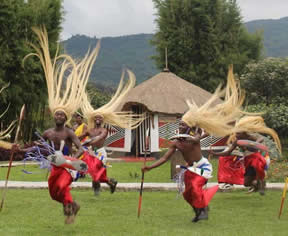 Formerly known as Iby’iwacu, the village is situated at the edge of Volcanoes National Park in Musanze district northern province about 168 sq.km (2-hour drive) north of Kigali capital city. The 169 sq.km protected area is part of Virunga massif famous for harboring endangered mountain gorillas. The people living near the park naturally depended on the forest for survival including hunting wild animals for bushmeat consumption. When poaching was banned in Rwanda due to strict laws, the cultural village near gorillas was established in 2005 as non-profit organization with aim of improving the lives ex-poachers. In relation to gorilla conservation, rural tourism in Musanze provides opportunity for jobs and many locals in the village have been able to make income to support their families. Iby’Iwacu offers interactive cultural activities suitable for children such as dance performances, lessons on basket weaving and among others such as how to shoot an arrow that hunters use, and playing the roles of marriage ceremony king and Queen with photoshoot and a traditional homestay experience. Farm tours are available for those interested in preparation of local food and banana beer brewing process. The cultural tour can be done in the evening after doing some of the activities in Volcanoes National Park including gorilla trekking, Dian Fossey hike and Karisimbi volcano hiking among others such as golden monkey tracking activity. Lake Kivu is 58 sq.km (2-hour drive) south-west of Musanze town and offers off the beaten path beach vacation in Rwanda.
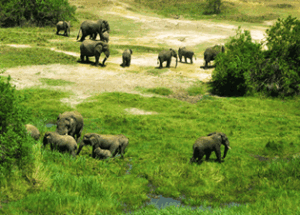 Akagera National Park is 105 sq.km (3-hour drive) east of Kigali capital city along the border with Tanzania. The park is Rwanda’s only savannah protected area covering 1122 sq.km that consists of short and tall grass savannah, rolling hills and Akagera river which fills several swamps and 10 lakes including Lake Ihema the largest. The park is rich biodiversity including Big 5 African mammals (lions, leopards, African elephants, Cape buffalo, eastern black and southern white rhinos) among others such as plains zebra, Masai giraffe, kobs, hippos and over 500 species of birds. Guests can enjoy searching wild animals in the African bush through day and game drives, boat cruises and sport fishing on the lake. Children below 5 years do not pay park entrance fees and are allowed on game drives and boat cruise. Besides, game viewing visitors can take children for a walk around the village which offers authentic cultural interaction including food crop harvesting and history of the park through “behind the scenes experience” at the park visitor center. The history of Akagera National Park is an interesting story of successful wildlife conservation in Rwanda. Poaching during the 1994 Rwandan genocide led to extinction of lions and black rhinos. In an effort to restore the lost wildlife, the government of through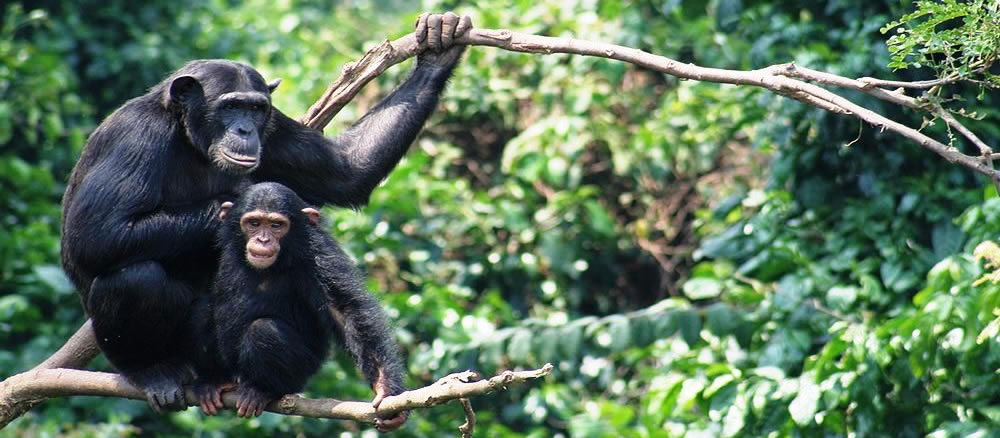
 In Kibale Forest National Park chimp trekking permit cost is $200 (foreign non-residents), $150 (foreign residents) and 150000 UGX (East African Citizen). Booking is available through a tour operator or Uganda Wildlife Authority head offices in Kampala capital city. The primate walk is available at 7:30am in the morning, 2:00pm for those intending to track chimps in the afternoon and offers 1 hour to see chimps in their natural habitat. On the other hand, Chimpanzee Habituation Permit cost is $250 per person. In this experience a maximum of 4 guests are accompanied by trackers and researchers into the forest early in the morning at 6:30am in order to see where chimps built their nests the previous night. Oftentimes, there’s a chance to watch how the primates start their day including mothers breastfeeding their babies and hunting for food on ground or tree canopies while looking for fruits. With the help of guides, visitors are guided through the forest hiking on foot which requires average physical fitness due to the natural of terrain. The chimp permit fees includes park entry, guide and ranger.
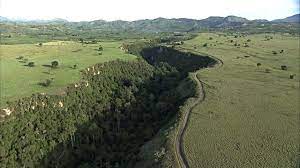 Found in Queen Elizabeth National Park, Kalinzu central forest reserve and Kyambura Gorge offer chimpanzee trekking at $50 per person. The activity is conducted early in the morning at 7:30am and the permit is available for booking at Mweya the Uganda Wildlife Authority park headquarters or through a tour operator. The primate experience at each is unique due to the difference in terrain, scenery and wildlife. Kyambura Gorge known as the Valley of Apes is 30 km north-east of Mweya visitor center. The reserve contains tropical forests found 100 meter deep underground in the rift valley escarpment home to 29 chimpanzees including a group that is regularly monitored for tracking. The Kyambura River flows through the gorge and attracts hippos and water birds including the African fin foot and greater flamingo. Chimpanzee trekking in Kyambura gorge is done by a maximum of 6 people with opportunity to explore the spectacular underground tropical forest and spot hippos safely. There’s one luxury Kyambura Gorge Lodge for those intending to stay there on a trip to Queen Elizabeth National Park.
 Uganda Wildlife Authority has habituated only one gorilla family – Nyakagezi with 9 individuals including two dominant silverback. For that reason, most people chose Bwindi Impenetrable Forest for its many gorilla families (22 groups). There are reasons to go for gorilla trekking in Mgahinga Gorilla National Park. Firstly is to reward the effort of rangers who monitor the group daily and keep it off from crossing the border to Rwanda or Democratic Republic of Congo. Secondary, you are likely to have small group of visitors on the trek and thirdly the view of the volcanoes is spectacular and the open bamboo vegetation offers great visibility for keen photographers. Enjoy
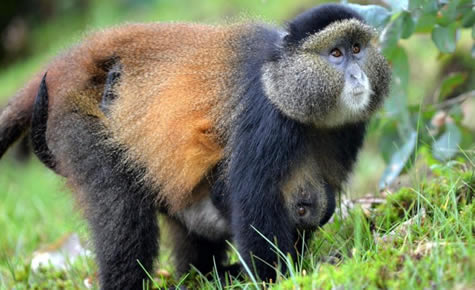
  Golden monkeys are endangered primate species of the old-world monkeys with an estimated population of 2500 – 3500 individuals endemic to Virunga area including Kahuzi Beiga, Volcanoes, Mgahinga Gorilla and Virunga National Parks. The behavior and ecology of golden monkeys is quite distinguished from other primates by their color with golden-orange fur on the upper flanks, back and crown. They are capable of moving fast in large social groups including 30 to over 60 individuals and inhabit the bamboo zone between 2800 – 3100 meters above sea level where food is abundant. Golden monkey diet includes up to 30 plant species including bamboo shoots, leaves and fruit. Hiking to the bamboo forest is quite straightforward, though challenging given the steep volcano slopes. Recommended getting a porter for $20 as it’s a good thing to help out the local communities. The Uganda Wildlife Authority has habituated 2 troops in the park for golden monkey tracking in Mgahinga Gorilla National Park. The golden monkey trek offers 1 hour to spend with the primates. The golden monkey tracking permit cost is $100 per person available for booking through Uganda Wildlife Authority head offices in Kampala capital city or through tour operator.
 Batwa (pygmy) originally lived in the tropical forests for over 6000 years but were evicted out of in 1991 when the park was gazetted. They were left vulnerable to poverty and diseases until 2000 when the United Organization for Batwa Development in Uganda (UOBDU) came at their rescue. The non-profit organization advocates for equal rights for the pygmies including land and housing, education and adult literacy, income generation through agriculture, forest access, benefit sharing and tourism. The Batwa trail was formed to offer an authentic
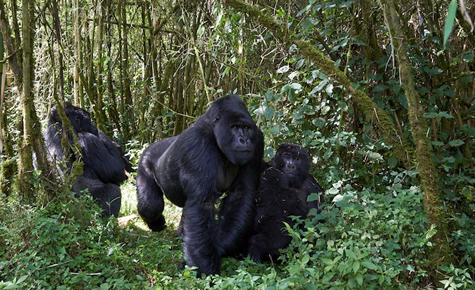
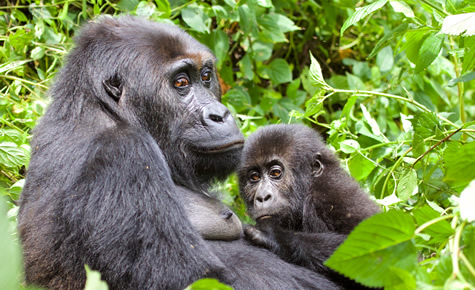

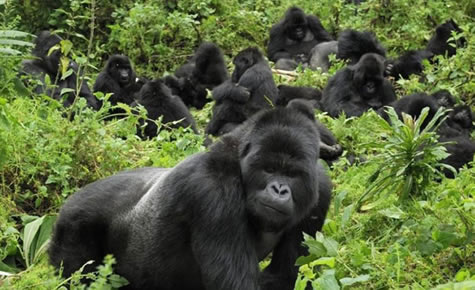
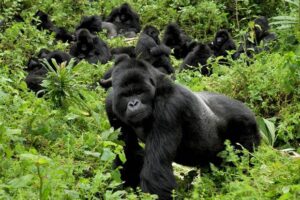 Generally, gorilla trekking experience in Rwanda, Uganda and DR Congo allows visitors to meet fully habituated gorilla families for 1 hour taking photos and observing how the great apes feed and play in the wild. For travelers who would want to spend more time with the gorillas, Uganda offers travelers a chance to take part in the gorilla habituation exercise which lasts four hours in Bwindi Impenetrable National Park. The experience takes place in Rushaga, one of the four gorilla-trekking sectors of Bwindi with the others including Buhoma, Nkuringo and Ruhija.
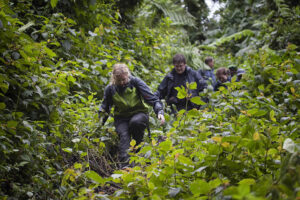 The terrain and vegetation of Virunga region and Bwindi Impenetrable National Park differs. Gorilla parks in Virunga area; that is Volcanoes National Park Rwanda, Mgahinga Gorilla National Park in Uganda and Virunga National Park in DR Congo comprise of volcanic mountains with an altitude range of 2600 to 4000 meters above sea level. While Bwindi’s altitude range is 1100 to 2000 meters above sea level.
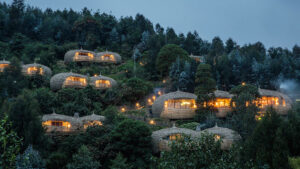 Rwanda is increasingly developing into a high-end tourist destination and its accommodation facilities like lodges and hotels are developed on that concept. Most of the lodges and hotels around tourist destinations like national parks are luxury and midrange with a few budget facilities. Uganda has a mixed range of accommodation facilities with all luxury, midrange and budget available at all the country’s tourist destinations and in major cities and towns.
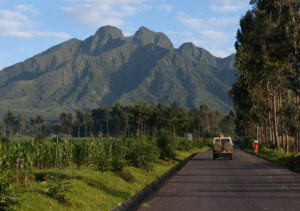 In Uganda, Bwindi and Mgahinga parks can be accessed both by road and air through charter flights.