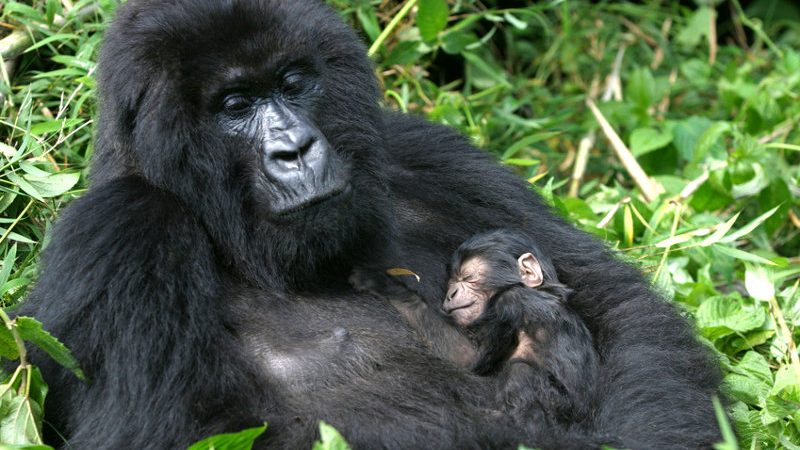
There are things that you should consider before confirming a gorilla safari in Uganda, Rwanda and the Democratic Republic of Congo. Safaris to see gorillas have nowadays become common among travelers coming to Africa attracting a high number of travelers from all parts of the world. The mountain gorilla (gorilla beringei beringei) is an African endangered great ape and does not thrive in captivity. The primate lives only in mountainous tropical forests of East and central Africa including Bwindi Impenetrable Forest National Park in south-western Uganda and the Virunga massif area which encompasses Volcanoes National Park (Rwanda), Mgahinga Gorilla National Park (Uganda) and Virunga National Park in the eastern part of Democratic Republic of Congo. The population of mountain gorillas in Africa is 1063 individuals according to recent statistics by Dian Fossey Gorilla Fund International (DFGFI) the world’s leading gorilla conservation organization. Since the discovery of gorillas in 1902, their numbers had been declining due to poaching, habitat loss, human conflicts and diseases. There were less than 500 gorillas in the 1980s. Conservation efforts that Dian Fossey pioneered including ant-poaching patrols (active conservation techniques) and veterinary care that intervenes to treat sick or injured gorillas helped subsequently in the monitoring and evaluation of the rate of gorilla population growth. Her work had great influence in protecting the primates for future generations. Today, gorilla trekking is the very essence of conserving mountain gorillas and support economic development in order to change the attitude of local people towards conservation in the communities adjacent to the protected areas mentioned above. Regardless of the destination you choose for a gorilla safari, there are certain things to know.
Gorilla trekking rules and regulations
When the first official gorilla tourism program begun in 1979 in Volcanoes National Park Rwanda, the main interest was to earn revenue rather than protect the primates. With the habituation of more gorilla groups and increase of tourist visits, the possibility of human disturbance which could disrupt the natural behavior of gorillas became a subject on which the establishment of gorilla rules was based. This included time spent per day with gorillas in their natural habitat. Consequently, several rules were created including maintaining a distance of 7 meters (21 feet), restricting those who are ill to minimize transmission of diseases and limiting the number of people to 8 visitors who can visit one gorilla family per visit for 1 hour. With time, more regulations were added including the following:-
• Visitors must wear facemasks due to covid-19 pandemic. Be sure to carry disposable masks and disinfectants.
• Prohibition of eating, smoking and drinking when with the gorillas
• Keeping voices low within 200 meters of reaching the gorillas
• No use of flash photography,
• Minimum age of trekking gorillas is strictly 15 years
• Visitors are must turn their face away and cover their mouth when coughing or sneezing
• Human waste must be buried 30 centimeters deep underground
• No trash should be left in the forests
• Sick visitors including those who test positive for covid-19 are not allowed to visit the gorillas.
• Visitors are not allowed to clear away vegetation to get a better view and must remain in a tight group under the guidance of a
wildlife rangers.
 Before confirming a gorilla tour, you should be in position to meet the above rules. Adhering to these rules is a win-win situation for both viewers and gorillas. Mountain gorillas share 98% of their DNA with humans which makes them vulnerable to infectious diseases including influenza (common cold), diarrhea and covid-19. Not only diseases can kill the primates but also unregulated gorilla visits can disrupt the natural behavior and ecology of gorillas. More importantly, the gorilla trekking briefing offers detailed instructions of things to expect on the day. Visitors must attend the briefing to understand to what to do in case a gorilla charges. Though, gorillas are known to be gentle and peaceful animals but can be aggressive when threatened. Obeying the rangers offers peaceful gorilla viewing opportunities which makes gorilla trekking safe for visitors. Furthermore, two of five rangers are armed in order to protect you against any potential danger including forest elephants. In return for good thanks, you can tip your rangers or put money in the tip-box at the gorilla center.
Gorilla permits
A gorilla permit allows visitors to visit gorillas strictly for 1 hour in Uganda, Rwanda and Democratic Republic of Congo. People qualified to participate in gorilla trekking activity must be 15 years old. Permits are available for booking through the official gorilla conservation authorities including Uganda Wildlife Authority (UWA) head offices in Kampala capital city, Rwanda Development Board (RDB) and Visit Virunga for Democratic Republic of Congo or through a tour operator. Reserving a permit should be the first item to confirm when planning a gorilla tour. The dates you intend to track gorillas and the location of accommodation must coincide with booking details. This is especially for gorilla trekking in Bwindi Impenetrable Forest National Park given that the park has 4 different gorilla trekking sectors including Buhoma (headquarters), Ruhija, Rushaga and Nkuringo. Each center is at a relative distance away from one another making it necessary to have your gorilla permit matching together with the place of stay. In the same manner, buying a permit should be done 2 to 3 months before the date of trekking especially those planning a gorilla safari around the high season during the months of December to February and June to September. The reason why you need to book ahead of time is that the availability of gorilla permits in Uganda tends to be limited for the peak season especially for Buhoma and Ruhija sectors and Mgahinga Gorilla National Park due to high number of visitors. In Rwanda permits are likely available regardless of the season which is also true for DR Congo gorilla safari.
The nature of terrain
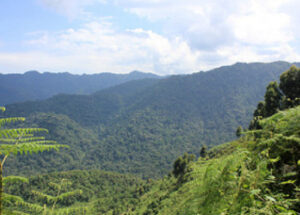 The altitude of Bwindi Impenetrable Forest National Park starts at 1100 meters in Buhoma to 2607 meters above sea level in Ruhija and Nkuringo sectors and the underlying layer of vegetation is thick. In Virunga massif, the altitude ranges from 3669 m – 4507 meters which comprise of Volcanoes, Mgahinga Gorilla and Virunga National Parks. The vegetation in Virunga region is relatively open due to presence of bamboo forests. Besides the rough and steep mountains, hiking can be challenging in relation to the time it takes to search and find the gorillas. The process of finding the gorillas can range from 30 minutes to 8 hours. Given that gorillas can move long distances in search of food, trackers usually leave early in the morning before briefing which offers a guarantee of finding them. This allows rangers and guides to find a shortcut way to the location of the primates. Good health and physical strength is important to endure the nature of terrain and length of a gorilla trek. Those with limited mobility or are unable to walk and complete their trek can be carried on a ‘sedan chair’ (gorilla helicopter) to and from the gorillas at an extra cost. In addition to being fit, visitors need to know what to wear for gorilla trekking including hiking boots, long pants and sleeved shirts, drinking water, packed lunch, rain jacket and insect repellant.
Activities to combine with gorilla trekking safari
Western Uganda circuit safari has 8 of 10 Uganda national parks of which 3 are savannah protected including Murchison Falls, Queen Elizabeth and Lake Mburo National Parks. Given that gorillas are in the same region, it’s easy to put together an itinerary including game viewing activities such as game drives and boat cruises in addition to gorilla trekking. Those aiming for Big 5 safari in Uganda can add Ziwa Rhino Sanctuary situated 164 sq.km (2-hour drive) north of Kampala capital city along the route to Murchison falls. Even with a short 3 day gorilla safari, village walks can be done in all four Bwindi gorilla trekking sectors which is a good way to support rural tourism among the communities adjacent to gorilla parks including the Batwa pygmies (keepers of the forest) in south-western Uganda. The Batwa trail in Mgahinga Gorilla National Park offers a chance to learn their ancient survival skills including the prehistoric fire making activity, hunting and food gathering. In that regard, gorilla tourism is a tool to empower local communities build a sustainable future especially Batwa who were evicted from their ancestral homes in 1991 when Bwindi Impenetrable Forest was gazetted as a national park. South-western Uganda has several lakes where you can go to relax after visiting gorillas. Lake Bunyonyi which is 70 km south of Bwindi impenetrable forest and 60 km from Mgahinga Gorilla national parks. In the same manner, Rwanda gorilla tour can be combined with a cultural tour at Iby’iwacu cultural village or Big 5 safari in Akagera National Park situated in the eastern province.