
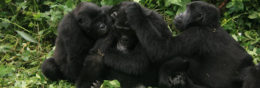
Trekking with mountain gorillas in Rwanda is the leading tourism experience taking visitors hiking deep in the bamboo vegetation of volcanoes national park, part of the virunga conservation area straddling across Rwanda, Uganda and the Democratic Republic of Congo. Turning mountain gorillas into a tourism strategy was first brought to international attention by the conservation efforts of Dian Fossey in the 1960s and 70s as a means of protecting and conserving these endangered species, which if not protected were at a verge of extinction; Rwanda’s gorilla tourism has now featured in numerous documentaries and has in the recent past been participated in, for example, by Bill Gates, Natalie Portman and Ted Turner
There are 10 habituated gorilla families in Rwanda available for trekking which include the Susa, Busingye, Bwengye, Karisimbi, Amahoro, Sabyinyo, Kwitonda, Umubano, Hirwa, and Ugenda Families. A group of 8 people maximum allowed to interact with the gorillas for the maximum of one hour is accepted.
Despite of the fateful history of the 1994 genocide of the Hutu against the Tutsi which led to the death of any people in Rwanda, the mountain gorillas in the volcanoes national park (Rwanda) has shed off the bad image that Rwanda had due to the civil wars that happened there, the country has 10 gorilla families available for trekking and a single permit is sold at 1500usd. Gorilla tourism has contributed to the growth and development of Rwanda’s economy through revenue earned; the gorilla permit is sold at 1500 usd which goes to the government for further development and conservation purposes.
Due to the fact that the volcanoes national park is located just two hour drive from the airport trekking gorillas is much easier as compared to Uganda and Democratic Republic of Congo, Rwanda is the leading gorilla tourism destination in the whole world.
Gorilla Safaris in Rwanda had come to a standstill due to the genocide in 1994, however it was re started in 1999 and has boomed at a high speed since then up to present, travelers to Rwanda after trekking gorillas participate in other tourism activities such as community walks and support local communities by funding local community projects which lead to the development of Rwanda’s economy as a whole providing foreign revenue and creating employment beyond the immediate vicinity of Volcanoes National Park.
In complement of the tourism projects in the area, the tourism revenue has been used for public works for example the government has built 57 primary schools in 13 districts, serving approximately 13,700 students over the past decade, 12 health centers have been built, along with roads and bridges. These infrastructures are used by the local communities in improving and sustaining their livelihoods.
Through the memorandum of understanding between the local people and the management of gorilla tourism in Rwanda, it was agreed upon that 20% of the total revenue collected from gorilla tourism goes back to local communities, this has resolved natural resource conflicts caused by unfair sharing of benefits from tourism between the local people and the organizers of gorilla tourism in the volcanoes national park in Rwanda.
Employment is the greatest opportunity brought in by gorilla tourism in Rwanda, many local people have been employed both directly and indirectly, local and international guides, park rangers and wardens, and porters among others earn income which help in sustaining their families and improving people’s standards of living.
Note; For many people who have been asking the reason as to why mountain gorillas are habituated in the national park, the endangered species are the close relatives of human beings which make them so susceptible to human sickness such as influenza and cough; this is why people are no allowed to come in close contact with the mountain gorillas so as to prevent this spread of diseases. Gorillas cannot live in zoos and vacuum spaces so they have to be left in the natural wild if they are to survive and live in good conditions for gorilla tourism to develop more and more I Rwanda rising the economy of the country.