
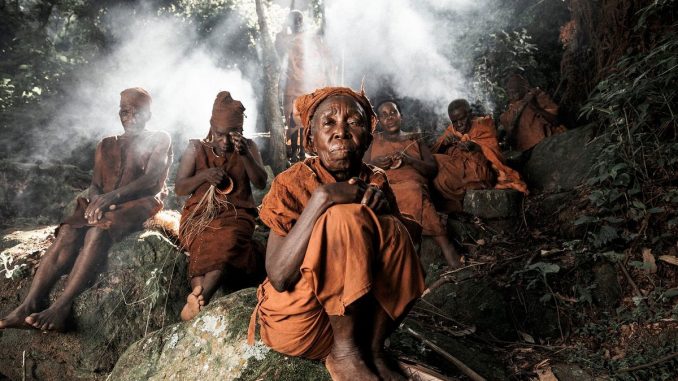
There is great fear by the elders of Batwa pygmies regarding the survival of their traditions and culture for their future generations. Batwa is a minority tribe surviving in forest edges of Uganda, Rwanda and the Democratic Republic of Congo. Before the introduction of gorilla tourism and conservation in gorilla national parks, Batwa pygmies were the permanent dwellers of Bwindi Impenetrable Forest, Mgahinga, Volcanoes Park and Virunga national parks. Batwa depended fully on the forest for a livelihood and appreciated the forest and their God-given resource, which they enjoyed with no limit.
Batwa lived harmoniously with wild animals for thousands of years until 1991 when gorilla tourism was introduced in the two national parks. Batwa were evacuated from the forest and forced to live in the boundaries of the forest. From then, Batwa were restricted from accessing the forest and all its resources, something that negatively affected the lives of the minority Batwa. Unfortunately, Batwa did not own any land hence did not qualify for any compensation from the government. The loss of access to the forest is slowly killing the traditional culture of Batwa pygmies. Elderly Batwa fear the loss of their Batwa identity, culture and language, which they believe their grandchildren will miss.
What happened after eviction from the forest?
After the introduction of gorilla tourism, Batwa were evicted to the boundaries of the forest. Batwa were further scattered into different groups and forced to live in places like Mpunga, Buhoma, Kitalito, Kebiroma, Mgahinga, Ruhija and Kisoro among others. The splitting of Batwa into different groups scattered them to different communities was the start of their disconnection. The Batwa pygmies have failed to adapt to a new life as their numbers and life expectancy reduces day by day. Also, the fact that Batwa had never settled in one location, the nomads had no land to claim hence did not call for any compensation from the government. However, as its role, the government promised to accommodate Batwa and find land for them but he has never happened due to a slow process.
Batwa culture
Batwa culture had and still strongly attached to the forest. The loss of their forest life, therefore, worry them that their culture will eventually disappear in the near future denying the future generation from enjoying their forest life. The restriction of Batwa from accessing the forest denies the young ones a chance to access their school for culture, which is in the forest.
What has been done?
In order to involve Batwa in tourism-related activities in Bwindi/Mgahinga forest national parks, Uganda Wildlife Authority (UWA) with the support of government and other Nongovernmental organizations have come up with Batwa cultural experience”. The activity is all about learning about Batwa forest life. The experience is now done in Mgahinga forest also home to Nyakagyezi gorilla family. Also a local community-based organization “Change a life Bwindi” is setting up a Batwa heritage Centre where Batwa will gather and showcase their traditions to visitors. Also, the center will be a training area for Batwa children about their grandparents’ forest life and how they lived in harmony with wild animals in the jungle.
What does Batwa cultural experience entail?
Also known as Batwa cultural trail, the experience is all about learning Batwa traditional forest life. Here Batwa pygmies lead travelers into the forest to perform different Batwa forest activities. These include hunting, fruit gathering, collecting honey, visiting Ngarama cave and searching medicinal herbs among others. Also in this experience, Batwa perform their traditional dances, songs that make travelers feel like part of the Batwa community. Of recent, Uganda Wildlife authority together with Uganda Tourism Board and the Ministry of Tourism launched another Batwa experience route in Bwindi forest national park. Batwa cultural experience is an add on to gorilla trekking in Bwindi forest and Mgahinga which together make a complete safari package to southwestern Uganda.
How much is a Batwa cultural experience?
Every traveler doing a Batwa cultural trail pays $80 to Uganda Wildlife Authority. This money is entirely given back to Batwa to improve their standards of living. Also, Batwa work as guides and porters in this experience, which earn them extra money.
Visiting and spending time with Batwa pygmies is one form of cultural tourism in Uganda. The involvement of Batwa in tourism activities indicates that the government thinks much of Batwa and wants the best of them.