Rwanda Gorilla tours

Transforming Tourism In Rwanda

Looking at present Rwanda, the once horrified country has surely risen from the ashes of the gruesome 1994 genocide to a safe gorilla safari destination offering life changing tour packages. The remarkable land of a thousand hills has truly progressed in promoting tourism industry that reward travelers with the unbeaten kind of gorilla and wildlife safari experiences. Rwanda’s travel experience comprise of gorilla trekking, chimpanzees, wildlife, history and cultural heritage which together have made tourism in Rwanda a success.

However despite the advancement, much more is to be done. There is great need for more professional and regionally integrated tourism in Rwanda. The highest populations of Rwanda’s tourist arrivals are from western countries with few East African residents. This therefore calls for an integrated Rwanda and East Africa as a single tourism destination so as to attract the highest population of travelers from all over the world. Among the things Rwanda development board should consider to transform its tourism industry include;

Creating a regional tourism experience
Rwanda is a small country to run tourism in isolation. This therefore calls for coordination with other East African countries so as to make regional tourism packages. More still, Rwanda mainly offer gorilla tourism but is limited with other tourism products such as game viewing in Uganda’s Murchison falls national park and Serengeti national park in Tanzania. This means that coordinating with other East African regions would draw travelers who initially visited Uganda, Rwanda and Tanzania to connect to Rwanda as a continuing one package.

Professionalizing the industry
There is need for change of attitude towards tourism industry. For the past decades, tourism industry has not been taken serious and never looked at as a first priority. Most professionals in Rwanda have not surely embraced tourism as a career but rather as an option as they look for better opportunities, which have pulled the industry behind. To address the negative attitude, the government in collaboration with other institutions of learning is called upon to prioritize tourism course for its recognition as a professional career.

Learning from others
Borrowing and applying knowledge of what other successful tourism destinations have done is a great idea for Rwanda. Each East African region has a different way of promoting tourism and has been in tourism business for a different period of time. Each time that passes, some thing new is done for the betterment of tourism sector in each country. East African is composed of five countries each of which has a different path of tourism and at a different stage of tourism development. Rwanda should therefore learn from the successes of other East African regions such as Kenya and Tanzania and use failures as stepping-stones for improvement.

Pay fair wages
Even when tourism is the main source of employment opportunities for over 1 million people in the whole region, the sector is known for less paying compared to other businesses. Apart from Kenya, other East African regions have failed to put a minimum wage for all workers in the industry. Kenya was the first country to raise the minimum wage for all workers in hotels and lodges to 9%, which is not a case in other East African countries.

Prioritizing soft skills
Since tourism industry is all about quality service, soft skills in all departments are very helpful. These skills are taught in schools and other institutions and they include customer care skills, communication skills and cooking. All departments in the tourism industry are therefore obliged to train workers to ensure quality service.
Catering for East Africa’s rising middle class
It’s unfair that East Africa travelers have always been taken as a second or third options by tour operators. European and American travelers are given the first priority even when marketing by Rwanda Development Board a government body responsible for marketing and new product development. While marketing, lucrative markets of the East African countries such as Kenya who’s middle class consists of 8 million people who spend USD7,000 to USD10,000 on holidays each year. This is much more than what western travelers spend on eating and other activities in Rwanda. East African community is the source market for Rwanda and the only thing required is extensive marketing.

Conclusively therefore, regional travel within East African countries is a way to go for Rwanda.

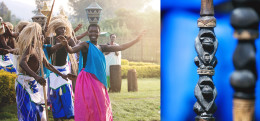
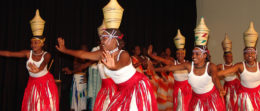
kinyarwanda-dance

How Rwanda has restored it’s Economy

Despite the tremendous genocide that hit Rwanda in 1994, the country has impressively rebuilt its image into a safest and Africa’s leading tourism destination. With in only 100 days, the heartless Hutus slaughtered over 800,000 Rwandese, men, women and the children mostly of the Tutsi tribe. However today, peace in Rwanda has been restored with the leadership of Paul Kagame which stability has made the country an end point for most travelers from all parts of the world interested in gorilla safaris. Rwanda also known as a land of a thousand hills has now left the dark history and progressed in to a stable country that many people yearn to stay. To address genocide scars, the ruling government has done many things aimed at benefiting genocide victims both directly and indirectly.

Health facilities
The establishment of strong health facilities is one of the key priorities that the government of Rwanda has invested in aimed at providing good health to the genocide victims. During the genocide, many people were severely bruised, and women raped which led to the contraction of different diseases, which required special treatment. In reaction, various referral hospitals such as king Faisal hospital were established supported by the fund for the neediest survivors of the genocide in Rwanda (FARG).
Additionally, Rwanda military hospital has helped to treat patients with acute cases. Many people who contracted different diseases and injuries in the genocide have been treated both in Rwanda and a broad supported by the government and the FARG. By 2017, roughly 10,139,033,177 FRW has been used for treatment of people within Rwanda while FRW 1,425,765,56 spent on the victims treated outside Rwanda. Government investment in the health sector has improved the health standards of local people hence restoring their happiness and dignity.

Education
Not only has the government invested in health but also in education costing roughly 75% of the country’s total budget. The government provides scholastic materials to secondary school children whereas those in higher levels of education are provided with school fees and FRW 25,000 for allowances. Approximately 24,147 and 295 students in secondary and higher institutions respectively was the fist round of school children enrolled in 1998. More still, FARG was established in 1999 to ease the distribution of funding and scholastic materials to school children. As of now, over 105,196 in secondary and 20,724 students in institutions of higher learning have finished school, which has promoted awareness and literacy level in Rwanda.

Income generating projects
Additionally, the government with the aim of generating income has established various projects for the local people. As a result of these projects, local people have been provided with cows, seedlings and income to improve their standards of living. An approximate of 46,551 people have taken part in these projects and 6000 cows have been so far given out to members of various projects. Besides cows, FARG has provided funding of 1,182,660,968FRW to people which money they have used to improve their standards of living.

Housing
To provide homes for the homeless genocide victims, the government has helped in building new homes and rehabilitating the old ones. A lot of property including people’s houses and businesses were destroyed by the genocide leaving them homeless and jobless. To address this, the government, churches, NGOS and embassies have intervened to provide shelter for the genocide survivors. New houses have been built for the homeless and the old ones rehabilitated to ensure comfortable sheltered by the government. More still, roughly 27,654 houses have been constructed and 3455 rehabilitated since 1998, which is a great achievement. More still, roughly 534 houses are being constructed and 83 houses rehabilitated in 2017 to provide shelter for the genocide survivors.

Direct support
The government and FARG provide direct support to the local people especially those who have no resources to run their day to day social life. More still a special project was established in 2013 to support the elderly survivors who lost their relatives, children and family members in the genocide. In 2017, roughly 23,836 needy genocide survivors are to be assisted under direct support whereas s 1544 are assisted as incike.

Conclusively therefore, Rwanda has taken a big step and rubbed off the negative image of the tremendous genocide. Presently, the country is known as the safest and the leading tourism destination in the whole of Africa.
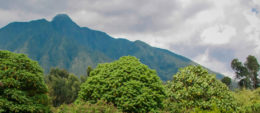
RDB Increases Rwanda Gorilla Permit Prices To 1500us

The rise of the Rwanda gorilla permit price from 750usd to 1500 usd with immediate effect comes as surprise announced by Rwanda Development Board (RDB) on 6th may 2017. The doubled gorilla permit cost applies to all travelers irrespective of the nationality meaning that Rwanda citizens will as well pay this price. A single gorilla package to Rwanda now costs 15000 usd with an exclusive personalised guide for every traveler. However,the new permit price does not affect travelers and tour operators who had paid or deposited on the permit at the time of the announcement. Additionally, the new cost will offer a discount of 30% to all trekkers who will stay in Nyungwe forest national park and Akagera national park for 3 days and above. Similarly, a 15% discount will be given to travelers who will travel to Rwanda or meetings and conferences but stayed in the country in the pre and post conference dates to see the mountain gorillas. This discount is offered by the Rwanda development board to inspire more travelers to the country.

The increased cost of the mountain gorilla permit aims to ensure sustainability of conservation initiatives enhancing visitor experience. Furthermore, increased gorilla permits aim to increase the benefits of local communities adjacent to the national park. Most of the people in the nearby communities were the former dwellers of the forest who depended fully on the forest for a livelihood. Rwanda receives the highest number of trekkers in the volcanoes national park every day, which has put the endangered species at risk. The national park is a home to the highest population of mountain gorillas roughly 62% of the total population for mountain gorilla in the virunga conservation area.

More still, the local communities share on the total income from tourism has been increased from 5% to 10%, which is hoped to increase people’s standards of living. Money earned from gorilla tourism is used to fund local community development projects hence empowering them economically. New high-end lodges are opening in Musanze all aimed to improve visitor’s experience at kinigi. Other plans such as renovating the visitors; information center equipping it with modern offices and tourism services such as digital facilities, children learning space as well as the conservation education are to be put in place.

Therefore, for every trekker to Rwanda, he/she must pay 1500us for a mountain gorilla package greatly assured of a remarkable experience.

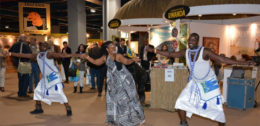
rwanda tourism exhibition

Rwanda Tourism Shines at the Dutch fair 2017

Its no secret that Rwanda tourism has come a very long way against all adds and today Rwanda stands out as the best mountain gorilla trekking destinations and is one of the top fast growing economies in Africa today. Its just in 2004 when Rwanda suffered a genocide and is making a tremendous recovery through promoting her tourism and increasing awareness internationally so as to receive more visitors.Rwanda without a doubt one of the safest countries to travel and with one of Africa’s cleanest capital cities.

Evident at the Dutch tourism fair, Vakantiebeurs 2017 where Rwanda was one of the 160 countries which took park in this fair, destination Rwanda stood out as major Dutch tour operators were captivated by what Rwanda tourism can offer their travelers.
Interestingly, large Dutch companies like Untamed Travel, AV Tours & Safari, Jambo Safari Club among others are very much interested in Rwanda’s tourism and have planned to send their agents for an initiation educational tour.
Currently Rwanda is receiving about 22% increase in arrivals from the Netherlands from 2015 and the numbers are growing to date.

In recent years, tourism in Rwanda has been getting strong reviews from various tradel experts. This year, CNN and Bloomberg marked Rwanda among the 17 best destination to visit this year, Wonderlust magazine and San Francisco Chronicle placed Rwanda among the top 10, Condé Nast Traveler named Rwanda as the second best travel destination in Africa in 2017, these are very great references for Rwanda tourism

Rwanda is the best place to see mountain gorillas in the jungle, offers mountain hiking adventure, with 3 mountain comprising of the virunga conservation region, home of golden monkeys, chimpanzees and colobus monkeys, the Land of a thousand hills is a nature lover’s dream, the avid birder’s destination, lake kivu and above all rich culture, happy people ready to receive and show you their country!

virunga volcanoes

Virunga Volcano Conservation Region

The Virunga conservation area contains two of the world’s most active volcanoes, the beautiful Virunga National Park, Rwenzori Mountains, Lake Edward and the Rwindi Plains in sub-Saharan Africa. For a long time, the region has been brutally exposed as a result of armed conflict but has survived because of the devotion of the park rangers and wardens, private donors, conservationists, politicians, and the European Union. Virunga Region borders Uganda, Rwanda and the Democratic Republic of Congo and is the most geographically diverse protected areas on the planet with far-fetched and exclusive flora and fauna.

The region is home for the mountain gorilla since the times of Dian Fossey. There are key things that have attracted so many visitors to the Virunga as a result has become one of the most visited places in Africa.
Mountain Gorillas

There is a tropical rain forest in Virunga Mountains along the volcanic slopes, which harbors the gorillas. It is believed that most of the world’s population of mountain gorillas lives in the Virunga Mountains in Central Africa.

Virunga tropical forest lies at the crossroads with the three countries and therefore the national parks take different names of Mgahinga National Park in Uganda, the Volcanoes National Park in Rwanda, and Virunga National Park in the Democratic Republic of the Congo.

Gorilla trekking in Mgahinga National Park
Mgahinga National Park is in Virunga region on the Ugandan part. The park has only one habituated and tracked gorilla group “Nyakagezi”.
The park’s main tourist attraction is gorilla tracking although there is only one habituated gorilla family that has a tendency of moving across to DRC or Rwanda. This activity, in the end, generates revenue to a great extent for the Uganda Wildlife Authority and to the adjacent communities, which help in gorilla conservation.

There are a number of strict rules followed by tourists during gorilla trekking so as to minimize the risk of disease dispersal to the gorillas. There are so many more offers at Mgahinga, which include; volcano hiking in the stunning Virungas, Batwa trail experience, cave explorations and golden monkey tracking.

Gorilla trekking in Volcanoes National Park
The Volcanoes National Park is located in northern part of Rwanda. It is the most popular and the most accessible park in Rwanda. Volcanoes national park comprises of 10 habituated gorilla families which are visited daily.

One can get to Volcanoes National Park using either public transport from Gisenyi or Kigali or from the airport which takes about 2hours. When planning to go for a gorilla trek in Volcanoes National park, one opts to wake up early and be at the Kinigi headquarters of ORTPN briefing point by 7:00 am.
You also have a chance aside gorilla trekking to go for hiking Karisimbi volcano, Mt. Bisoke volcano hike and visiting the twin lakes of Ruhondo and Bulera.

Gorilla trekking in Virunga National Park
Virunga National Park previously faced recurring political instabilities in surrounding places in DRC. So many people and gorillas lost their lives in cold blood and the place was hit by so much poverty in that poachers started to hunt gorillas for sale and meat and severe cutting down of trees for sale and charcoal.

For 2 years now, a good number of tourists have visited the park purposely for gorilla trekking. This was aided by the commitment of the park rangers and the extensive monitoring in the park together with community education programs.
Visiting the mountain gorillas in Virunga National park is a compensating life-changing experience as you see the good-natured human-like creatures. Mountain gorillas are calm, highly intelligent with a silverback that shows its powerful presence and the mothers show tenderness and care to the juveniles that spend most of their time playing which is mesmerizing to view.

Dian Fossey’s grave
Dian Fossey an American conservationist closely studied and researched the mountain gorillas day and night purposely to protect them and Volcanoes National Park became her home for about 18 years.

Gorilla numbers were slowly reducing in 1967 due to poaching and hunting and this forced Fossey to make the mountain slopes of the Visoke volcano her home till her death in cold blood by the poachers.

Golden Monkeys
The golden monkeys of the Virunga Region are unique species that live in the bamboo forest in groups of up to 30 individuals. Golden monkeys are only seen in the Virunga forests of Volcanoes National Park in Rwanda and the Mgahinga National Park in Uganda.

These rare endangered primate species love to eat potatoes aside fruits and leaves just like other primates. Males appear more golden than the female monkeys have more concentrated orange back. As you trek through the bamboo trees, you see and hear the monkeys jumping through the tops.
Golden monkey is scientifically called (Cercopithecus mitis kandti) have a lifespan of up to 19 years and measures about 48 to 67cm in size where male measure 46 – 53cm. Males weigh 4.5 – 7kg/12kg and females weigh 3.5 – 4.5kg.

The Virunga Mountains
Virunga Mountains are about 9 volcanoes that cover a great range of habitats on 790,000 hectares. The area has a lot of savannas and lava plains, unique giant herbs, swamps, lowland and montane forests to volcanoes and the snowfields of Rwenzori over 5,000m high.

The park lies in the western rift valley on the adjacent mountains of Rwenzori and volcanic Virunga massifs with savanna, and swamp-edged.
The Virungas are famous because of the scenery formed by the unique mountain range. The region consists of eight major volcanoes 2 active volcanoes of Mount Nyiragongo, Mount Muhabura Mount Nyamuragira, Mount Sabyinyo, Mount Mikeno Mount Bisoke and Mount Gahinga which lie 3,462 metres 3,063 metres 4,507, 3,634, 4,437, 3,711and meters high respectively.

Batwa Pygmies
The Batwa Pygmies called “Twa” in Rwanda are the majority of local inhabitants in the northern part of the Virungas. This pygmy tribe was known for carrying out forbidden traditional hunting and was later forcefully evicted from the forests so as to gazette the areas as national parks however the Batwa never carried out any farming nor charcoal making there was no destruction of the forest and they protected the environment as they are said to have lived in harmony with wildlife especially Gorillas and the forests.

The Batwa People are slowly diminishing and are now less than 3,000 since they resettled and intermarried with people from the local communities and are believed to become extinct in many numbers. Today, the Batwa people are found either Mgahinga Gorilla National Park or Bwindi Impenetrable Forest.
Visiting the Batwa communities gives you a chance to learn their history, culture and lifestyle especially you have the Batwa Cultural Experience and the Buniga Forest Walk.

In the end you realize that the life of the “twa” drastically changed since 1991/1992 since now they have a right to be heard with the start of various Batwa organizations within Rwanda and Uganda that are making a difference on their own behalf and also foreign non-profit organizations that started and devoted themselves to serve the Batwa People in southwest Uganda since 2002. These organizations, for example, the American medical missionaries purchased land for building homes schools, a hospital, and clinics for the Batwa and also established programs to improve their living like income generation and water sanitation projects.

rwanda cultural tours

Diversifying Rwanda’s Tourism beyond Gorillas

Talk of tourism in Rwanda, first thing that comes in one’s mind is Mountain Gorillas but it’s more than just Gorillas. There are so many other options available for a tourist say going for Canopy walks, visit to Kigali, Rwanda’s Museums and Memorial Centers, Lake Kivu, Bird watching or Parks! Rwanda in the olden times had lost much due to war but is now reviving its tourism with its natural beauty, landscape, volcanoes, waterfalls wildlife and rainforests though much emphasis has been put on to gorilla tourism.

The country’s north is famously known for mountain gorillas because of efforts of Dian Fossey in the 1960s and 1970s. A number of tourists visit the volcanoes National Park for gorilla trekking and so the country put strict rules for those trekking and habituating and a price to pay for the permits. Despite the fact that Rwanda has mainly focused on gorillas it also has other national Parks and tour places which have helped in poverty diminution through the involvement of communities.

Whereas the gorillas still stay as the country’s main drive for revenue, there is need for diversity in Rwanda’s tourism. Let’s take a look at different options to be done to promote tourism in Rwanda; ease in city tours/movement, loosening up local organizational policies, construct leisure parks, promote entertainment industry, maintain its current security and protect the environment.

The government has dedicated to develop tourism in the country through establishment of a safe Rwanda, a safe destination for tourists and also involvement of the communities and private sector in policy implementation.

RDB should affix on its website a selection of different options on what to explore while in Rwanda. Many clients come from Europe, USA and Asia with different interests in Rwanda and this would be an opportunity for RDB to sell more of the country’s positive outputs. Rwanda has a great weather which most countries do not have.

The government, private sector, communities, NGOs are key players in tourism development and have played big roles to the tourism industry in the following ways;

  • The National government should provide an enabling environment for sustainable tourism to burgeon, and provide the overarching idea of a sustainable tourism industry by establishing a safe and stable political and economic environment for tourists.


  • The private sector plays a significant role in development and promotion of tourism through delivery of quality tourism services and promoting involvement of local communities and individual tourism services in tourism ventures by providing quality products and services


  • The communities play an imperative part in the development of tourism through identification of prospective tourism attractions and resources around the area and participation in decision making towards ornamental reimbursement of tourism and lessen the negative impacts.


  • Non-governmental organizations have also played a momentous part development of tourism through assisting the private sector and communities and the government in implementation, and monitoring and evaluation of tourism based projects as well as assisting the government in conducting tourism and environmental awareness programs among communities and the tourism industry as a whole.

Rwanda through RDB can increase its creative base through the development and promotion of existing tourism products and the major National Parks, Marketing and awareness, developing human resources and capacity building.

kigali city tours

Exploring Kigali city tour

Well acknowledged as the Switzerland of Africa, Kigali is the principal city in Rwanda situated in the heart of the country. The city is the main tourism hub (first stop) for all travelers to Rwanda and was professed the capital in 1962 when the country gained her independence. Despite the miserable histories of the genocide that hit the city in the 1994, Kigali has now picked up and is a very safe place tourists crave to visit. Besides being a tourism center, Kigali is the Centre for most economic, cultural, political and historical businesses and structures. A combination of all these draws the devotion of every first traveler to the country providing him or her with in depth information guided by Africa Adventure Safaris

The cleanness, calmness, and the well-organized streets and local markets always astonish travelers to Rwanda compared to the other cities all over the world. Tourism in Kigali entails the following:

Nyamirambo women’s center
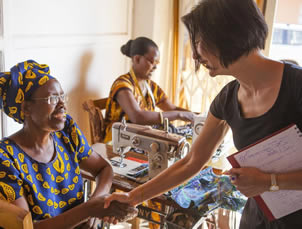
Kigali cityHere explorers are enthused around by a group of ladies who are the members of the Nyamirambo women’s group. These women implement different activities including making hand crafts such as bags, mats, baskets, making hair in their salons and many others as well as preparing local foods for the travelers. Travelers are blessed to take part in activities such as sowing, tailoring, buying art crafts which experience they cannot forget. The income earned by these women to used to support their families hence refining their standards of living.
Genocide memorial center
Located in Gisozi district northern part of Rwanda, the center is visited to honor the victims of the genocide. There are mass graves where the remains of approximately 250,000 people who were killed in 1994 genocide were buried. Travelers to the site are told the contextual genocide and how thousands of people were slaughtered in just 100 days. Videos, books and magazines are displayed which give travelers intense information concerning the genocide. The time spent at the center is real touching and humbling to all travelers, as they listen to the sorrowful stories of never again. Most travelers who visit the site come out humbled and appreciating how far Rwanda has come despite the tremendous genocide.

Rulindo cultural center
This was opened up in 2015 during the celebration of the world tourism day in order to diversify tourism in Rwanda. While at the center, the exhibitions of local and traditional arts and culture are shown to the travelers. There are cultural guidebooks and magazines that tell more about Rwanda hence making a visit to the center educative. More still, there are local people that demonstrate their cultures to the travelers done in form of traditional dances, poems, stories, and dressing codes. Travelers are allowed to take part in traditional practices, which make them feel like part of the society the experience they live to remember.

Visit the local markets
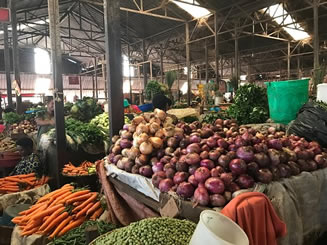
Kigali city tourThere are numerous local markets that operate on different days of the week in Kigali. The largest local market is kimisagara market, which has different sections and operates everyday. The market offers a variety of products to the travelers which include clothes, children’s toys, fruits, bags, pans, shoes, water jugs, suitcases, sunglasses and designer watches among others. The market is managed under the control of the Kigali city council (KCC), which gives licenses to local people to own small stalls. The products are sold at affordable prices and travelers buy them for remembrance after going back to their original destinations.

Where to sleep
Kigali is served with high-class hotel and accommodation facilities. These include grand legacy hotel, Kigali Serena hotel, hotel chezo lando, hotel des mille collines, five to five hotel, Lemigo hotel, Iris guesthouse, urban by city blue Kigali and gorilla golf hotel. These hotels offer both luxury and low budget fulfilling the interests of all travelers (high end and budget travelers).

In conclusion therefore, Kigali is a tourism hub in Rwanda providing the pre-experience to all travelers to Rwanda. The experience is made possible by the unique cultural, historical and manmade resources in the city that every traveler should explore.

gorillas in virunga national park

Virunga National park

The Virunga National Park was established in 1925 as Africa’s first national park and was formerly named Albert National Park. Parc National des Virunga (in French), stretches from the Rwenzori Mountains in the North, to the Virunga Mountains in the South, in the eastern Democratic Republic of the Congo.The Park covers 7,800-square-kilometre (3,000 sq mi) which includes forests, Savannah, lava plains, erosion valleys, swamps, active volcanoes with the glaciated peaks of the Rwenzori Mountains. It was mainly founded to safeguard endangered Mountain Gorillas that were constantly poached and killed during the Congo civil War.

Virunga National Park is a sensational place to visit as it harbors a number of other animals like chimpanzees, hippopotami, bird species, forest and Savannah elephants and lions. The park is now secured and also known for its two amazing active volcanoes of Mt. Nyiragongo and Mt.Nyamuragira located in the massifs of the Rwenzori and Virungas mountains.
A number of activities are done in Virunga National Park which includes birding, nature walks, both Gorilla and Chimpanzee trekking, Mt.Nyiragongo hiking and hiking to Senkwekwe orphanage. While preparing for gorilla and chimpanzee trekking and to go for hiking, trekkers are usually advised to carry with them some crucial requirements like cold weather gears, raincoats since rain often showers during the rainy season.

Gorilla Trekking in Congo
Gorilla Trekking is a significant practice done and a life changing experience in the Virunga National Park and is worth due to the existence of the primates in that are delightful to relate with. Tourism is beginning to recover within the Virunga National park after nearly two decades of conflict.

Virunga National Park managed by the Congolese National Park Authorities, Institute Congolais pour la Conservation de la Nature (ICCN) and its partner the Africa Conservation Fund now is a home to about 200 gorillas in the southern areas. There was a reported decline in numbers about seven years ago, due to brutal attacks in which at least 10 gorillas were killed. Today, the gorilla population has improved and is more stable due to the efforts of rangers risking their lives in Virunga National Park.

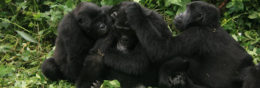
Gorillas are subdivided into family groups with different attributes with silver backs that act as leaders. The silverback’s powerful presence, his calmness, the care that mothers show their young and the playful juveniles is overwhelming. Mountain gorillas are good natured and fascinating to watch. Trekking begins at Bukima Patrol post and usually takes about 1-2 hours of hiking in each direction with a park rangers depending where the mountain gorillas spent the previous night. Visitors are always required to wear surgical masks when in the presence of gorillas so as to safeguard the health of Virunga’s gorillas. It’s always advisable to cancel if only one has a cold, fever, diarrhea, or persistent sore throat since mountain gorillas are extremely susceptible to human illnesses especially human respiratory viruses and other common ailments.

For one to trek Gorillas at Virunga National park, they must have a gorilla permit that costs USD 465 to enjoy a safari holiday with Africa Adventure Safaris’ guide since they insure you are safe throughout your tour. The cost of a Mountain gorilla trekking permit per day includes; Adult (international) at $400and the Congolese residents at $150.

Chimpanzee Habituation
Chimpanzees habituation in Virunga National Park started in February 2014 when Congolese team trained by Frankfurt Zoological Society started living in the forests around park headquarters in Rumangabo.
Guests interested in trackers leave their camp as early as 4:30am to set for where the chimpanzees spent the previous night. Groups are limited to only 4 people and time with the chimpanzees is restricted to one hour. Chimpanzee habituation had come to a standstill due to the civil unrest 1992-2001 and this had put the whole chimpanzee tourism to an end. Despite this prolonged period of conflict, Virunga National Park rangers consistently protected and monitored Tongo’s chimpanzees.

Visitors are always advised to cancel if they don’t feel well at the time of their planned walk i.e. if they have a cold, fever, diarrhea, or persistent sore throat because just like gorillas, chimpanzees are extremely susceptible to human illnesses. Most chimpanzees have died after being exposed to human respiratory viruses and other common ailments. Chimpanzee habituation walk permit are at a cost of $100 for adult international visitors and : Adult Congolese pay $25

Mount Nyiragongo Hiking
Mt. Nyiragongo is a beautiful volcano covered with vegetation and sometimes is dusted with snow that features the world’s largest lava lake. It is a home to a variety of animals, including chimpanzees, monkeys, and bushbuck. Nyiragongo is greatly feared during eruptions because of the low silica content of its lava that flows extremely fluid. In 2002 Mt. Nyiragongo erupted and lava flows were clocked at 100 km/hr (62 mph) and reached all the way to Lake Kivu.

Trekkers to the summit of Nyiragongo volcano always begin at the Kibati patrol post, 30 minutes by car from Goma and one hour from Rumangabo. Normally the park rangers lead all treks and porters are always available for hire. The fitness of each group determines on the average time required to reach the summit usually takes 4 – 6 hours. Climb begins at 1989m (6,525 ft) and ascends to 3470m (11,382ft) in a short time.

People interested in trekking are always advised have proper hydration and should speak to their physicians about taking preventative measures before making the climb in case they are prone to Acute Mountain Sickness (AMS).
Climbs always begin at 10:00 am with a ranger station. Check in at the Kibati station by no later than 9:15 am on the day of their climb. Trekkers are strongly advised to bring full rain and cold weather gear as the temperatures at the summit are usually below freezing. Failure to bring proper gear leads to hypothermia. Congolese Adults pay $90, international Child pays $175 and a Congolese Child pays $25 to hike.

Nature Walks in Virunga
Nature walking usually entails transferring from one destination to another for purposes of appeasing the mind, taking time to trail through various paths to spot different forms of nature like birds and relaxing from the noise of civilization and stress.

Walks in Virunga National Park are done to various areas like the Gorilla Orphanage center at Senkwekwe situated in Rumanagabo near the park headquarters where they will experience four gorillas that were saved from being trafficked by the poachers who hunt them in the thick forest vegetation for exportation and trade and also take part in tracking the chimpanzees at the thick forest of Tongo.

Birding in Virunga Park
Watching different species of birds using either your ears or eyes, telescopes, binoculars in their natural habitat is a way of relaxation and taking time. The sounds and noise from the tremendous bird species usually rise you up very early in the morning at around 5:00 am they sing with in the trees. You are compelled to get out of bed as these sounds extra ordinary and persuasive. This makes your experience Virunga National Park exceptional and rare to find anywhere else. In Virunga National park there a number of different bird species that inhabit the thick forest vegetation namely the Grey-throated Barbet, Double-toothed Barbet, Yellow-billed Barbet, Madagascar Bee-eater, Narrow-tailed Starling

ishasha tree climbing lions

Top Attraction in Ishasha Sector of Queen Elizabeth National Park

Located in the southern part of Queen Elizabeth National Park, ishasha offers the off beaten track kind of experience to travelers. The sector is real awesome composed of riverine and open savannah kind of vegetation along side the acacia and fig trees. Despite its remoteness, ishasha has become the most liked and frequently visited sector compared to other sections of the national park. The undulating landscapes that provide a clear view of wildlife and the entire national park to travelers is another interesting issue about ishasha sector in Queen Elizabeth National park which is the second largest and popular park in Uganda . It takes approximately two hours from the Mweya peninsular to ishasha but the experience is real amazing.

Tree climbing lions
This is the highlight of tourism in ishasha, which has made it so popular in the entire national park. Tree climbing lions that reside up in the acacia and fig trees are spotted each and every time hanging up in the trees. It is believed that the desire to prevent the bites by the tsetflies and other ground insects is the reason as to why these lions climb in the trees. More still, it is believed that worldwide, ishasha is the only place with unique climbing lions along side lake Manyara in Tanzania. Herds of lions led by a king of the jungle are spotted resting lazily or else eating up their preys up in the trees. Lions are seen during game drives through this section and photographs are taken for remembrance, the experience is real awesome.

Other wildlife
It does not stop at tree climbing lions but goes far beyond to several other animals. A huge number of elephants, buffalos, antelopes, Uganda kobs, impalas, waterbucks, warthogs, and elands among others. Experienced guides help in spotting these animals and explaining the characters of each spotted animal, which increases visitors, understanding of wildlife in Queen Elizabeth national park.

Visit the crater lakes
Queen Elizabeth national park is a home to crater lakes with interesting histories. These include lake katwe known for salt mining; lake Nyamunyanyange for migratory flamingos and lake Bunyampaka where salt mining has recently started. Travelers who visit these sites buy the crafts and local products, which they take home for remembrance.
In addition to the above, a boat cruise at kazinga channel is most liked by travelers. The channel connects lakes Edward and gorge and provides travelers with great view of the national park and the nearby fishing areas. Travelers enjoy the fresh waters and air at the channel which freshness their mind hence a memorable experience.

Where to sleep
There are several accommodation and lodging facilities serving travelers to ishasha sector and Queen Elizabeth as well. These include ishasha wilderness camp, Mweya safari lodge, Marafiki safari lodge, queen Elizabeth bush lodge, kasenyi safari camp, Ihamba lakeside safari lodge and park view safari lodge among others. These lodges offer food and sleeping services at affordable prices varying depending of the traveler’s income. The services range from luxury to low-budget meaning that travelers of each kind acquire quality services at affordable prices.

When to visit
The dry season between June to September is the best time to visit the sector and the national park as a whole. The grass is short which makes it easy to spot wildlife grazing and predators hunting. However, the national park can be visited all year round, it can be visited at any time of the year and the activities can be participated in.

In conclusion therefore, ishasha sector is the most visited section of queen Elizabeth national park. The experience offered is extraordinary rarely found in other parts of the county and the whole world as well, travelers should therefore travel there for a phenomenal and exciting experience.

gorilla tours volcanoes

Rwanda’s Gorilla Tourism a strategy to save Gorillas & communitites

Trekking with mountain gorillas in Rwanda is the leading tourism experience taking visitors hiking deep in the bamboo vegetation of volcanoes national park, part of the virunga conservation area straddling across Rwanda, Uganda and the Democratic Republic of Congo. Turning mountain gorillas into a tourism strategy was first brought to international attention by the conservation efforts of Dian Fossey in the 1960s and 70s as a means of protecting and conserving these endangered species, which if not protected were at a verge of extinction; Rwanda’s gorilla tourism has now featured in numerous documentaries and has in the recent past been participated in, for example, by Bill Gates, Natalie Portman and Ted Turner

There are 10 habituated gorilla families in Rwanda available for trekking which include the Susa, Busingye, Bwengye, Karisimbi, Amahoro, Sabyinyo, Kwitonda, Umubano, Hirwa, and Ugenda Families. A group of 8 people maximum allowed to interact with the gorillas for the maximum of one hour is accepted.

Despite of the fateful history of the 1994 genocide of the Hutu against the Tutsi which led to the death of any people in Rwanda, the mountain gorillas in the volcanoes national park (Rwanda) has shed off the bad image that Rwanda had due to the civil wars that happened there, the country has 10 gorilla families available for trekking and a single permit is sold at 1500usd. Gorilla tourism has contributed to the growth and development of Rwanda’s economy through revenue earned; the gorilla permit is sold at 1500 usd which goes to the government for further development and conservation purposes.

Due to the fact that the volcanoes national park is located just two hour drive from the airport trekking gorillas is much easier as compared to Uganda and Democratic Republic of Congo, Rwanda is the leading gorilla tourism destination in the whole world.

Gorilla Safaris in Rwanda had come to a standstill due to the genocide in 1994, however it was re started in 1999 and has boomed at a high speed since then up to present, travelers to Rwanda after trekking gorillas participate in other tourism activities such as community walks and support local communities by funding local community projects which lead to the development of Rwanda’s economy as a whole providing foreign revenue and creating employment beyond the immediate vicinity of Volcanoes National Park.
In complement of the tourism projects in the area, the tourism revenue has been used for public works for example the government has built 57 primary schools in 13 districts, serving approximately 13,700 students over the past decade, 12 health centers have been built, along with roads and bridges. These infrastructures are used by the local communities in improving and sustaining their livelihoods.

Through the memorandum of understanding between the local people and the management of gorilla tourism in Rwanda, it was agreed upon that 20% of the total revenue collected from gorilla tourism goes back to local communities, this has resolved natural resource conflicts caused by unfair sharing of benefits from tourism between the local people and the organizers of gorilla tourism in the volcanoes national park in Rwanda.

Employment is the greatest opportunity brought in by gorilla tourism in Rwanda, many local people have been employed both directly and indirectly, local and international guides, park rangers and wardens, and porters among others earn income which help in sustaining their families and improving people’s standards of living.

Note; For many people who have been asking the reason as to why mountain gorillas are habituated in the national park, the endangered species are the close relatives of human beings which make them so susceptible to human sickness such as influenza and cough; this is why people are no allowed to come in close contact with the mountain gorillas so as to prevent this spread of diseases. Gorillas cannot live in zoos and vacuum spaces so they have to be left in the natural wild if they are to survive and live in good conditions for gorilla tourism to develop more and more I Rwanda rising the economy of the country.